Cardiac Ablation
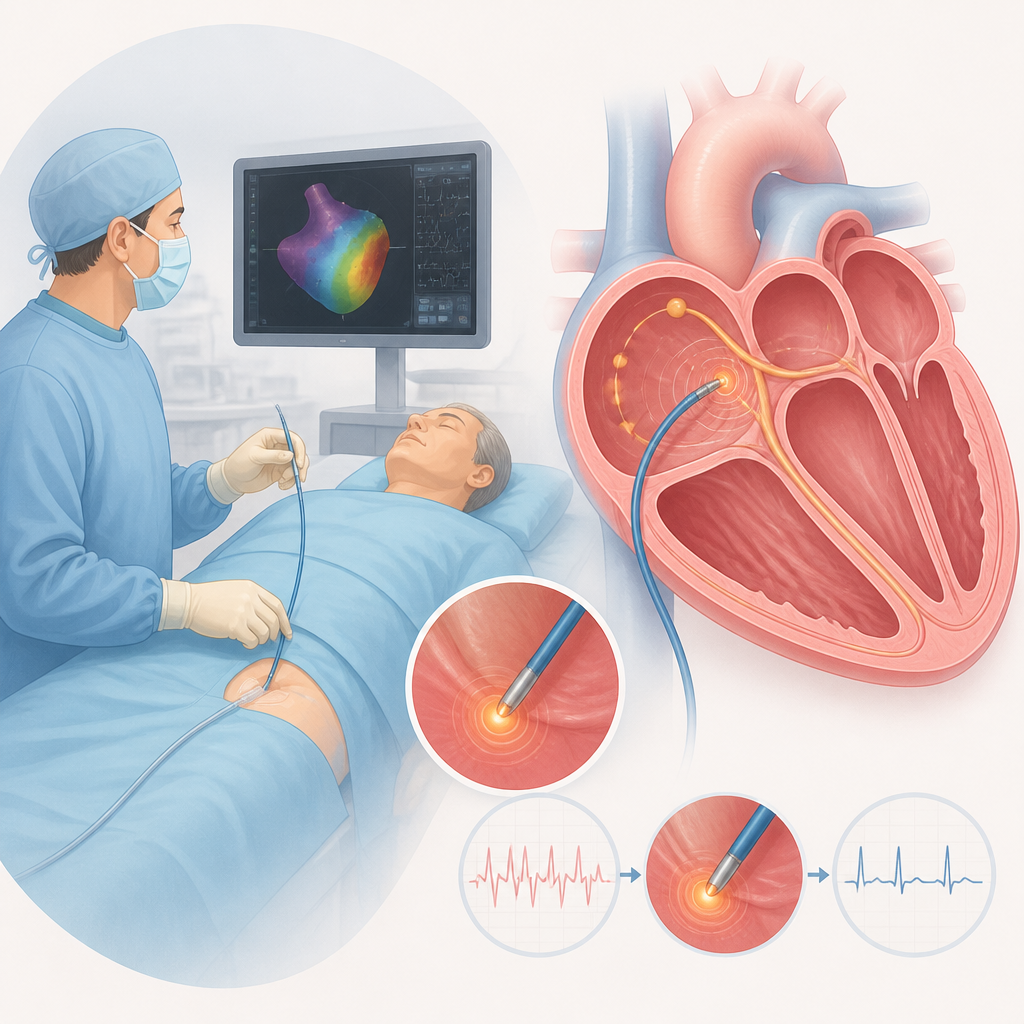
Cardiac ablation is a procedure used to treat heart rhythm problems (arrhythmias) by creating tiny scars in heart tissue to block irregular electrical…
- Success rate
- 50%–80%
- Avg cost (US)
- $20,000–$50,000 (range)
- Recovery
- 3–7 days (range)
- US volume / yr
- 150,000–250,000/yr (range)
Browse verified cardiology providers who offer this procedure.
This procedure is primarily for individuals with arrhythmias such as atrial fibrillation (AFib) or ventricular tachycardia (VT). It is often recommended when heart medications are not effective or cause significant side effects.
During the procedure, a doctor inserts thin, flexible tubes called catheters through blood vessels, usually in the groin, and guides them to the heart. Sensors on the catheters use heat (radiofrequency energy) or cold (cryoablation) to create small scars that redirect the heart's electrical signals.
Most patients spend a few hours in a recovery room; some may stay in the hospital overnight. While activity is limited for several days to allow the insertion site to heal, most people can return to normal non-strenuous activities relatively quickly.
While specific U.S. consumer pricing varies by insurance, clinical data suggests the procedure is a cost-effective long-term strategy for heart health compared to lifetime medical therapy.
Questions to ask your doctor
- What type of ablation energy (heat or cold) is best for my specific arrhythmia?
- What are the risks versus the benefits for someone in my age group?
- How many of these specific procedures do you perform annually?
- Will I need to continue taking blood thinners or heart medications after the procedure?
- What is the likelihood that I will need a second 'touch-up' procedure?
Frequently asked
Success rates for AFib ablation are generally favorable, typically ranging from 50% to 70%, though long-term success including multiple procedures can reach 80%.
Yes, research indicates that procedures like VT ablation have high success rates (over 80%) in patients over age 60, though younger patients may have slightly higher success rates.
The procedure is performed under sedation or general anesthesia, so you should not feel pain. You may feel some soreness or bruising at the catheter insertion site during recovery.
Studies show that catheter ablation is a cost-effective option that improves quality of life compared to long-term medical therapy alone.
Deep dive: Cardiac Ablation in 2026: Recovery, Success Rates & Tech
Disclaimer: This article is for informational purposes only and does not constitute medical advice. Please consult with a qualified healthcare professional regarding your specific medical condition.
Who it's for
Cardiac ablation is a specialized procedure designed for individuals living with cardiac arrhythmias—irregular heartbeats that interfere with the body’s ability to pump blood efficiently. By 2026, the criteria for who can benefit from this procedure has expanded significantly due to clinical breakthroughs in early intervention.
The most common candidate is someone diagnosed with Atrial Fibrillation (AFib), a condition where the upper chambers of the heart quiver instead of beating steadily. However, ablation is also a primary treatment for Supraventricular Tachycardia (SVT), heart flutters, and certain types of ventricular tachycardia.
You might be an ideal candidate if:
- Medications to control your heart rhythm are ineffective or cause intolerable side effects like fatigue or dizziness.
- Your arrhythmia is causing symptoms that diminish your quality of life, such as shortness of breath, chest palpitations, or extreme exercise intolerance.
- You have "persistent" AFib, where the heart remains in an irregular rhythm for long periods, increasing the risk of stroke or heart failure.
- You are a younger patient looking for a long-term solution rather than a lifetime of daily pharmacological management.
How it works
In 2026, the technology behind cardiac ablation has moved toward "precision mapping" and "non-thermal energy." While traditional methods used extreme heat (radiofrequency) or extreme cold (cryoablation) to scar the heart tissue, many modern clinics now utilize Pulsed Field Ablation (PFA).
The procedure typically follows these steps:
- Access: A specialist called an Electrophysiologist (EP) makes a small incision, usually in the groin, to access a vein.
- Navigation: Using advanced 3D ultrasound and electromagnetic mapping, the doctor threads thin, flexible tubes called catheters up to the heart. This creates a high-definition "GPS map" of your heart's electrical system in real-time.
- Targeting: The EP identifies the specific cells sending out the "glitchy" electrical signals that cause the arrhythmia.
- Ablation: The catheter delivers energy to those precise spots. This creates a tiny, controlled scar. Because scar tissue does not conduct electricity, it acts as a permanent roadblock, preventing the stray signals from disrupting your heartbeat.
The shift toward PFA technology is significant because it is "tissue-selective," meaning it can neutralize heart cells without risking damage to nearby structures like the esophagus or nerves, making the procedure faster and safer than ever before.
Recovery & timeline
Restoring your heart rhythm is a process, not just a single moment. While the procedure itself usually takes two to four hours, your recovery follows a specific trajectory.
Immediate Recovery (Days 1–3): Most patients go home the same day or after one overnight stay. You will likely feel tired and may have some mild bruising or soreness at the catheter site. Your heart might feel like it is "skipping" or racing occasionally; this is normal as the heart tissue heals from the inflammation caused by the procedure.
The Healing Phase (Weeks 1–6): During this time, you will be advised to avoid heavy lifting or high-intensity workouts. Most people return to office work within three to five days. You will continue to take blood thinners or rhythm medications during this "blanking period" while the scars stabilize.
Full Results (Months 3+): It generally takes about three months to determine the final success of the ablation. By this point, the inflammation has subsided, and the heart has "remodeled" its electrical pathways. Many patients report a dramatic increase in energy levels and a total cessation of palpitations during this window.
Cost & insurance
In the current 2026 healthcare landscape, cardiac ablation is widely recognized as a "gold standard" treatment, which has improved insurance coverage across the board.
Insurance Coverage: Most major private insurers, as well as Medicare and Medicaid, cover cardiac ablation when it is deemed medically necessary (i.e., when symptoms are present or medications have failed). Because ablation is proven to reduce future hospitalizations for heart failure and stroke, insurers often prefer it as a cost-saving measure in the long run.
Out-of-Pocket Costs: Your specific costs will depend on your deductible, co-insurance, and whether the facility is in-network. In 2026, many centers offer "bundled pricing" for ablation, which combines the surgeon’s fee, anesthesia, and facility costs into one transparent price.
Prior Authorization: It is vital to ensure your EP’s office obtains prior authorization. They will need to submit documentation of your arrhythmia (usually via EKG or Holter monitor) and a history of your symptoms.
Risks & alternatives
Every medical procedure carries some level of risk. While cardiac ablation has a high success rate (often 70-90% depending on the condition), potential complications include:
- Bleeding or infection at the incision site.
- Damage to the heart’s electrical system requiring a pacemaker (rare).
- Fluid buildup around the heart.
- Blood clots, which is why blood thinners are used during and after the procedure.
Alternatives:
- Medical Management: Continuing with anti-arrhythmic drugs and beta-blockers.
- Cardioversion: A procedure where the heart is "reset" with an electric shock (this often provides only temporary relief compared to ablation).
- Lifestyle Modification: In very mild cases, weight loss, treats for sleep apnea, and reducing alcohol consumption can significantly manage symptoms, though they rarely "cure" a structural electrical issue.
How to choose a provider
The success of a cardiac ablation is highly "operator-dependent," meaning the experience of the doctor matters as much as the technology used. When selecting a provider in 2026, consider these three pillars:
- Volume and Specialization: Look for an Electrophysiologist (not just a general cardiologist) who performs at least 100 ablations annually. High-volume centers typically have lower complication rates and better outcomes.
- Advanced Technology: Ask if the center utilizes 3D mapping and Pulsed Field Ablation (PFA). Facilities that invest in the latest technology often prioritize patient safety and shorter procedure times.
- Integrated Care: Choose a provider that offers a multidisciplinary team, including specialized nurses and coordinators who can manage your medication adjustments and follow-up care through remote cardiac monitoring apps.
Don't be afraid to ask for their specific success rate for your particular type of arrhythmia. A transparent, high-quality provider will be happy to share their data and walk you through a personalized risk-benefit analysis.
If you are ready to regain your energy and protect your long-term heart health, contact our office today to book a consultation with one of our rhythm specialists.
Related patient questions
Sources
- Very Long-Term Results Of Atrial Fibrillation Ablation Confirm That ...
- Cost‐effectiveness of catheter ablation versus medical therapy for ...
- Cardiac ablation - Mayo Clinic
- Outcome of catheter ablation in the very elderly‐insights from a large ...
- Catheter Ablation of Atrial Fibrillation: An Overview for Clinicians
Find a board-certified cardiology provider in your area.
General information only — not medical advice. Always consult a qualified clinician for your specific situation.