Ear tube surgery
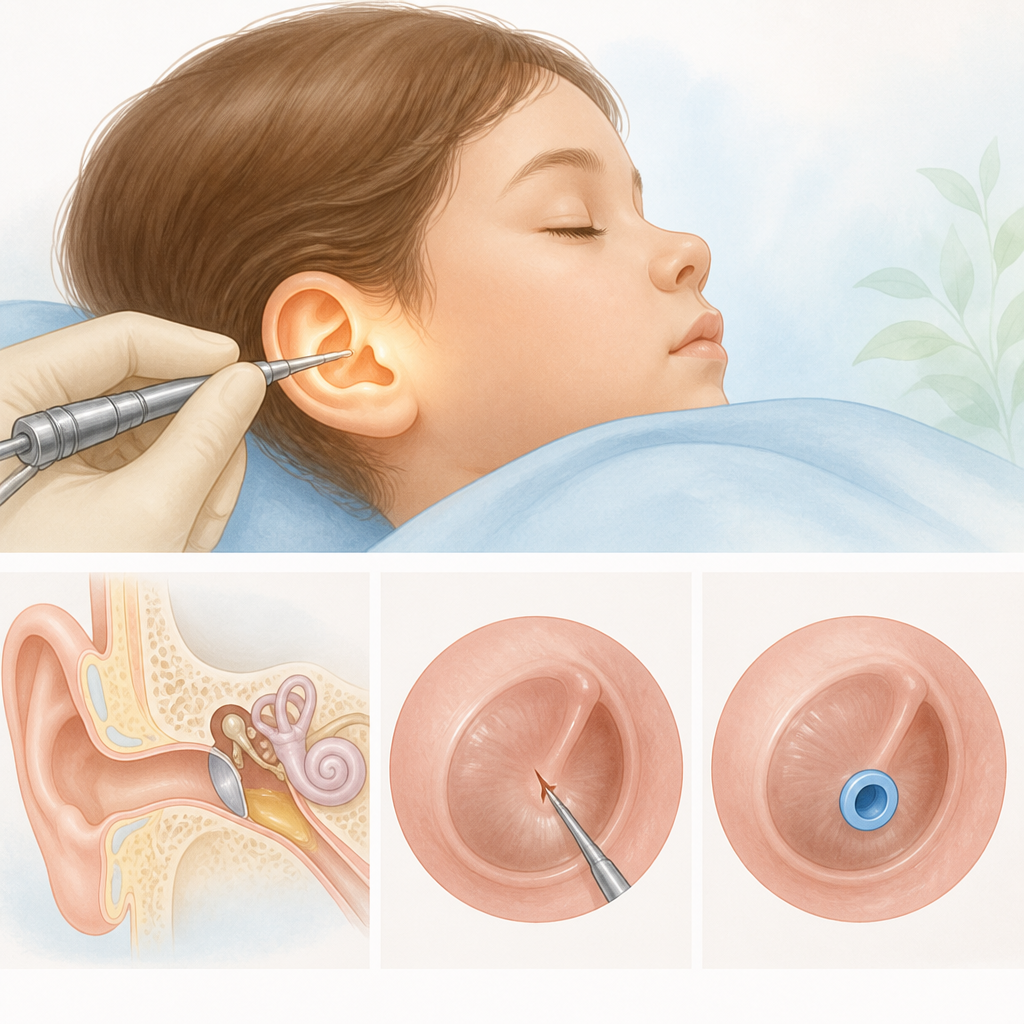
Ear tube surgery involves placing tiny hollow tubes in the eardrum to improve airflow, treat chronic infections, and restore hearing loss in children and…
- Success rate
- 70% - 98.7% (range)
- Avg cost (US)
- $2,000 - $6,000 (range)
- Recovery
- 1 - 2 days (range)
- US volume / yr
- 500,000 - 700,000 (range)
Browse verified pediatrics providers who offer this procedure.
This procedure helps children and adults who suffer from chronic middle ear infections, persistent fluid buildup, or Eustachian tube dysfunction that has not improved after three months of observation or medical treatment.
Surgeons place tiny, hollow tubes into the eardrums to allow air into the middle ear and prevent fluid accumulation. While often done in a hospital, some procedures for children can be successfully performed in a clinic setting.
Recovery is generally quick, with many patients returning to normal activities shortly after the procedure. The tubes are designed to stay in place for several months to help the ear heal and equalize pressure.
Medical costs vary based on the facility (in-office vs. hospital) and insurance coverage; consult your provider for specific U.S. pricing in 2026.
Questions to ask your doctor
- Is my child a candidate for in-office tube placement?
- How long do you expect these specific tubes to stay in the eardrum?
- Will my child need to wear earplugs while swimming or bathing?
- What are the signs that a tube has fallen out or is blocked?
- How will we monitor my hearing or my child's hearing after the surgery?
Frequently asked
The surgical placement of ear tubes is a short procedure, often completed in about 15 to 30 minutes.
Surgery is typically the preferred option if an ear condition fails to recover after a period of observation or medical treatment, usually lasting 3 months.
Yes, studies on adult Eustachian tube dysfunction show symptom resolution success rates ranging from 70% to over 90%.
Deep dive: Ear Tube Surgery for Kids: What Parents Should Expect in 2026
Medical Disclaimer: This post is for informational purposes only and does not constitute medical advice, diagnosis, or treatment. Always seek the advice of your physician or other qualified health provider with any questions you may have regarding a medical condition.
Who it's for
If your child seems to have a permanent "stuffy" feeling in their ears, or if you’ve become a regular at the pharmacy for antibiotic prescriptions, you are likely looking for a long-term solution. Ear tube surgery—medically known as a myringotomy with pressure equalization (PE) tube insertion—is one of the most common pediatric procedures performed today.
In 2026, we primarily see two groups of young patients who benefit from this procedure. The first group consists of children with chronic otitis media with effusion. This is a fancy way of saying fluid is trapped behind the eardrum for more than three months without an active infection. This fluid can act like an earplug, muffling sound and potentially delaying speech and language development during critical early years.
The second group includes children with recurrent acute otitis media. These are the kids who experience frequent, painful ear infections—typically three episodes in six months or four in a year. When antibiotics are no longer effective or when the infections are so frequent that they disrupt the child’s sleep and quality of life, tubes are often the next logical step.
While most patients are between the ages of six months and three years, older children and even teenagers with chronic pressure issues or structural eardrum problems may also be candidates.
How it works
The procedure itself is remarkably quick, often taking less than 15 minutes. It is performed under a brief general anesthesia, ensuring your child is asleep and feels no pain. In modern pediatric clinics, we use "light" anesthesia, which allows children to wake up quickly and feel less groggy than they might after a major surgery.
The surgeon uses a high-powered microscope to make a tiny incision in the eardrum. They then suction out any trapped fluid. Finally, they place a small tube—shaped like a microscopic spool—into the hole. These tubes are usually made of fluoroplastic or silicone, which are biocompatible materials that the body accepts easily.
The tube’s job is simple: it acts as a mechanical replacement for the Eustachian tube (the natural drainage pipe in the ear that often doesn't work well in young children). By allowing air to enter the middle ear, the tube prevents the vacuum that sucks in fluid and allows the ear to stay dry and healthy. Think of it like a tiny vent that keeps the ear "breathing."
Recovery & timeline
One of the reasons ear tube surgery remains a gold standard is the rapid recovery. Most children are back to their normal, boisterous selves within a few hours of the procedure. You might notice an immediate improvement in their hearing—some parents joke that their child suddenly has "super hearing" and reacts to sounds they ignored before.
For the first 24 to 48 hours, you might see a small amount of clear or blood-tinged drainage from the ear. This is normal and expected. We typically provide antibiotic ear drops to use for a few days to keep the area clean and prevent early clogging of the tube.
The timeline for the tubes themselves is long-term. Ear tubes are designed to be temporary. As the eardrum heals and the child grows, the ear naturally pushes the tube out. Most tubes stay in place for 6 to 18 months. When the tube eventually falls out, it usually lands in the outer ear canal, where it is either caught in earwax or falls out during a bath. In the vast majority of cases, the hole in the eardrum heals shut on its own once the tube is gone.
Cost & insurance
In 2026, the cost of ear tube surgery involves three main components: the surgeon’s fee, the anesthesiologist’s fee, and the facility fee (the hospital or surgery center). Because this is a standard, evidence-based procedure for chronic ear issues, it is covered by almost all major private insurance plans as well as Medicaid.
However, "covered" does not always mean "free." Depending on your specific plan’s deductible and co-insurance, out-of-pocket costs can range significantly. Many modern pediatric centers now offer "bundled pricing" for ear tubes, providing a single, transparent price upfront if you are paying out-of-pocket or have a high-deductible plan.
It is important to check if your insurance requires a "prior authorization." Usually, your ENT (Ear, Nose, and Throat) office will handle this, providing the insurance company with the history of infections or hearing test results to prove the procedure is medically necessary.
Risks & alternatives
While ear tube surgery is very safe, no procedure is without risks. The most common minor complication is "otorrhea" or persistent ear drainage. This happens in about 15% of children and is usually treated easily with ear drops. Rarely, a tube might stay in too long (requiring manual removal) or the hole in the eardrum might not heal after the tube falls out (requiring a small patch later). Scarring of the eardrum, called tympanosclerosis, can also occur, though it rarely affects hearing.
Some parents prefer to explore alternatives first. These include "watchful waiting," which involves monitoring the fluid for another 3-6 months to see if it clears on its own. Others may try long-term low-dose antibiotics, though this is less common today due to concerns about antibiotic resistance. In some cases, addressing underlying allergies or removing enlarged adenoids (tissue behind the nose) can help, as these often contribute to ear blockage.
How to choose a provider
When choosing a provider for your child’s ear tubes, look for a Board-Certified Pediatric Otolaryngologist. While general ENTs perform this surgery, pediatric specialists carry extra training specifically focused on the smaller anatomy and unique emotional needs of children.
In 2026, look for a provider who utilizes a family-centered care model. This means they should offer:
- Child-friendly facilities: A surgery center designed to look less like a hospital and more like a playroom.
- Transparent communication: A provider who explains the "why" and "how" without using confusing medical jargon.
- Access to Audiology: A clinic that has an on-site audiologist to perform pre- and post-operative hearing tests to document your child’s progress.
- Modern anesthesia protocols: Centers that allow a parent to be present while the child falls asleep can significantly reduce anxiety for both the child and the parent.
Trust your instincts. The best provider is one who listens to your concerns about your child's speech, sleep, and pain levels, and works with you to decide if timing is right for tubes.
If you are ready to help your child hear more clearly and live with fewer ear infections, contact our office today to book your pediatric ENT consultation.
Related patient questions
Sources
- Ear tubes - Mayo Clinic
- In‐office insertion tympanostomy tubes in children using single‐pass ...
- Success rates in restoring hearing loss in patients with chronic otitis ...
- Therapeutic outcomes of tympanostomy tube insertion for otitis ...
- Results - Interventions for adult Eustachian tube dysfunction - NCBI
Find a board-certified pediatrics provider in your area.
General information only — not medical advice. Always consult a qualified clinician for your specific situation.