Gut Health Microbiome Testing
Gut microbiome testing analyzes bacteria in your digestive tract to assess wellness and monitor recovery after infections, antibiotics, or clinical treatments.
- Success rate
- 86% (range for FMT success)
- Avg cost (US)
- $150-$600 (range)
- Recovery
- 0 days
- US volume / yr
- 500,000-1,000,000 (range)
Browse verified integrative medicine providers who offer this procedure.
This testing is designed for individuals monitoring their digestive health status, those recovering from enteric infections, or patients undergoing treatments like Fecal Microbiota Transplantation (FMT) to restore bacterial balance.
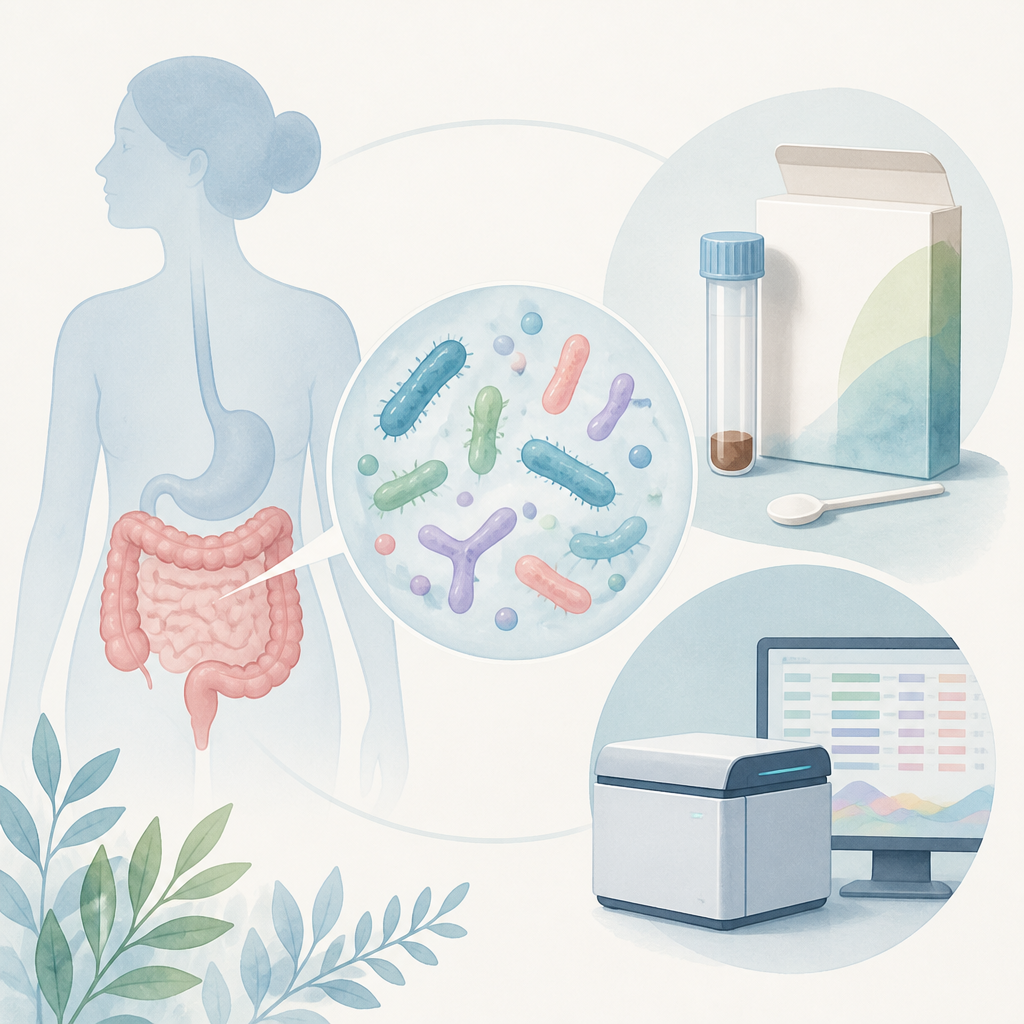
Patients provide a stool metagenome sample. The lab analyzes the diversity and concentration of bacterial populations, such as Bacteroidetes and Firmicutes, to compare your results against healthy wellness indexes.
Providing a sample requires no recovery time. However, the gut microbiome begins significant recovery after disruptions within weeks; for example, post-infection populations can rebound to approximately 49.3% Bacteroidetes and 26.9% Firmicutes.
Testing prices vary by provider and depth of metagenomic sequencing. Most consumer tests fall within a moderate range, while clinical-grade diagnostics may cost more depending on insurance coverage.
Questions to ask your doctor
- How does my Gut Microbiome Wellness Index compare to healthy individuals?
- Will this test identify specific bacterial imbalances after my antibiotic course?
- Can fermented milk products or probiotics help improve my microbiome recovery status?
- Is this test a clinical diagnostic or a general wellness screening?
- How should I adjust my diet based on the concentration of Firmicutes found?
Frequently asked
While indices can classify healthy vs. non-healthy stool samples, current capabilities often focus on wellness status and research rather than standalone clinical diagnosis.
Studies on Fecal Microbiota Transplantation have shown success rates around 86% for resolving conditions like C. difficile.
Yes, antibiotics significantly disrupt gut bacteria; however, fermented milk products have shown small, measurable benefits in aiding microbiome recovery.
Tests typically look for the rebound of major groups, specifically Bacteroidetes and Firmicutes, which predominate in a recovering healthy gut.
Deep dive: 2026 Gut Health Microbiome Testing Guide | Integrative Care
Medical Disclaimer: The information in this post is for educational purposes only and does not constitute medical advice, diagnosis, or treatment. Always seek the advice of your physician or other qualified health provider with any questions you may have regarding a medical condition.
The landscape of personalized medicine has transformed rapidly, and by 2026, we have moved far beyond simple “probiotics for all.” We now understand that your gut microbiome—the ecosystem of trillions of bacteria, fungi, and viruses living in your digestive tract—is as unique as your fingerprint. It influences everything from your daily energy levels and skin clarity to your mental health and immune resilience.
Integrative medicine has embraced advanced microbiome testing as a cornerstone tool. Rather than guessing which supplements you need, these tests allow us to map your internal ecosystem with precision. If you are feeling "off" despite normal blood work, your microbiome may hold the answers.
Who it's for
Microbiome testing is no longer reserved for those with severe digestive distress; it has become a foundational tool for proactive health management. However, certain individuals stand to benefit the most from these insights.
First, this is for patients struggling with chronic gastrointestinal issues that conventional tests haven't fully explained. If you experience persistent bloating, gas, diarrhea, or constipation (often categorized under the broad umbrella of IBS), microbiome testing can identify specific imbalances—such as an overgrowth of methane-producing bacteria—that standard colonoscopies might miss.
Second, it is for those managing systemic inflammatory or autoimmune conditions. Because approximately 70% to 80% of the immune system resides in the gut, imbalances here can trigger flares in conditions like rheumatoid arthritis, psoriasis, or Hashimoto’s thyroiditis.
Finally, we are seeing a surge in patients using these tests for "brain-gut" optimization. If you struggle with brain fog, anxiety, or mood swings, these tests can measure your body’s ability to produce neurotransmitters like serotonin and GABA, which are heavily influenced by specific gut microbes. Whether you are a high-performing athlete looking for an edge or someone simply trying to reclaim their vitality, this testing provides a roadmap.
How it works
In 2026, the technology behind these tests has evolved from basic bacterial identification to "Shotgun Metagenomic Sequencing" and transcriptomics. In simpler terms, we aren't just looking at who is living in your gut; we are looking at what they are actually doing.
The process is non-invasive and completed in the privacy of your home. You will receive a kit containing a small collection vial and a specialized swab. A tiny stool sample is all that is required. Once you mail the kit to the lab, the analysis begins.
Advanced labs now use Artificial Intelligence to compare your microbial DNA against vast global databases. They look for:
- Diversity Scores: How many different species you have (more is generally better).
- Pathogens: The presence of "bad" bacteria, parasites, or yeast (like Candida).
- Metabolic Byproducts: Levels of Short-Chain Fatty Acids (SCFAs) like butyrate, which protect your gut lining and reduce inflammation.
- Probiotic Levels: Whether your "good" bacteria, such as Bifidobacterium and Lactobacillus, are sufficient to protect you.
Results typically arrive within two to three weeks, presented in a digital dashboard that translates complex genetic data into actionable insights.
Recovery & timeline
Because microbiome testing is a diagnostic tool and not a physical procedure, there is no "recovery" time associated with the test itself. However, the "recovery" of your gut health is a journey that follows the results.
Once we receive your data, we implement a personalized protocol. For most patients, the timeline for feeling a difference looks like this:
- Weeks 1–4: As you adjust your diet and start targeted supplements (like prebiotics or specific strains of probiotics), you may notice changes in digestion, such as reduced bloating or more regular bowel movements.
- Months 2–3: This is the "rebuilding" phase. During this time, systemic symptoms often begin to improve. Patients report clearer skin, more stable moods, and a reduction in "brain fog."
- Month 6: We often recommend a re-test at this stage. Microbiomes are dynamic; they change based on what you eat and how you live. The six-month mark allows us to see how well the ecosystem has shifted and whether we need to adjust your maintenance plan.
Cost & insurance
The cost of microbiome testing has become more accessible as the technology has scaled. As of 2026, a comprehensive metagenomic test typically ranges between $250 and $500.
Insurance coverage remains a nuanced area. While traditional health insurance plans often cover standard stool cultures for pathogens (like salmonella), they may not yet fully cover high-resolution genomic sequencing for "wellness" purposes. However, many patients successfully use their Health Savings Accounts (HSA) or Flexible Spending Accounts (FSA) to pay for these kits.
In our integrative practice, we view this as a front-end investment. Identifying the root cause of a health issue now can save thousands of dollars in future trial-and-error supplement purchases, lost work productivity, and unnecessary pharmaceutical interventions.
Risks & alternatives
The primary risk of microbiome testing is not physical, but rather the risk of "information overload" or misinterpretation. A common pitfall is attempting to self-treat based on a raw data report without professional guidance. For example, taking a high-dose probiotic when you have Small Intestinal Bacterial Overgrowth (SIBO) can actually make your symptoms worse.
There is also the "snapshot" limitation. Your microbiome can change if you’ve recently taken antibiotics, traveled, or changed your diet significantly. It is important to test during a period of relative routine to get the most accurate baseline.
Alternatives to genomic testing include:
- Standard Stool Samples: Useful for finding parasites or acute infections but lacks the "big picture" of your ecosystem.
- Breath Testing: Specifically for SIBO or lactose intolerance.
- Elimination Diets: A low-cost way to identify food sensitivities, though it doesn't give you data on your actual bacterial makeup.
How to choose a provider
Not all microbiome tests are created equal. When choosing a provider or a test kit, look for those that utilize "Shotgun Metagenomics." Older "16S rRNA" testing is less precise and can often misidentify bacterial species.
Furthermore, the magic is not in the test itself, but in the interpretation. Choose an integrative medicine practitioner who understands how to weave your results into a holistic plan. The right provider won't just give you a list of foods to avoid; they will explain the "why" behind your results and help you integrate changes into your lifestyle sustainably.
Look for providers who offer a follow-up consultation to review the results, as the data can be dense and overwhelming. A good practitioner will help you prioritize the most important changes so you don't feel like you have to overhaul your entire life overnight.
If you are ready to stop guessing and start measuring your path to optimal health, book a consultation with our team today to discuss which microbiome test is right for you.
Sources
- Improved gut microbiome recovery following drug therapy is linked ...
- Recovery of the Gut Microbiome following Fecal Microbiota ... - PMC
- Gut Microbiome Wellness Index 2 for Enhanced Health Status ... - PMC
- Current Capabilities of Gut Microbiome–Based Diagnostics and the ...
- Recovery of the gut microbiome following enteric infection and ...
Find a board-certified integrative medicine provider in your area.
General information only — not medical advice. Always consult a qualified clinician for your specific situation.