Heart Stent
A heart stent is a tiny wire mesh tube used to open up coronary arteries that have become narrowed or blocked by plaque. The procedure, often performed during…
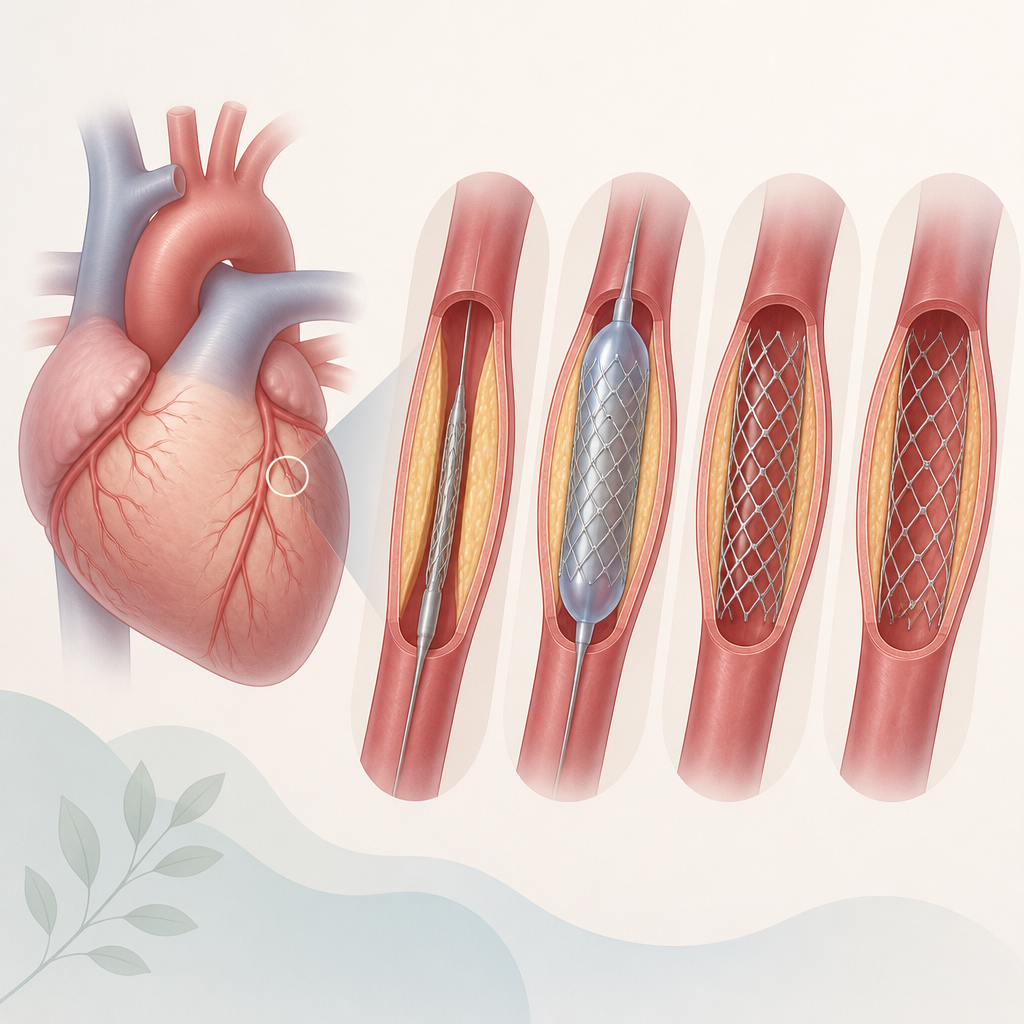
- Success rate
- 91% to 95%
- Avg cost (US)
- $20,000-$45,000 (range)
- Recovery
- 1-3 days (range)
- US volume / yr
- 600,000-1,000,000 (range)
Browse verified cardiology providers who offer this procedure.
This procedure is primarily for individuals with significant arterial blockages who may be experiencing chest pain (angina) or are suffering from a heart attack. It aims to reduce symptoms and improve survival rates, which have been observed at approximately 91% to 95% at intervals ranging from one to four years, depending on the patient's age and health status.
The procedure typically takes several hours. A thin tube (catheter) is threaded through a blood vessel in the arm or groin up to the heart. A balloon is inflated to widen the artery, and the stent is placed to keep it open. Most patients are awake but sedated. While hospital stays vary based on the reason for the procedure, many patients are monitored for a short period before being discharged.
Recovery is relatively quick compared to open surgery. Most patients spend a few hours to a day in the hospital. While the insertion site may be sore, many individuals return to light activities within a few days. Long-term management involves taking prescribed blood thinners to prevent the stent from closing and adopting heart-healthy lifestyle habits.
$15,000-$60,000 (range)
Questions to ask your doctor
- Is a stent more effective for my specific condition than medication and lifestyle changes?
- What type of stent (drug-eluting or bare-metal) are you planning to use?
- How long will I need to take blood-thinning medications after the procedure?
- What are my specific risks for complications like restenosis or bleeding?
- How soon can I return to work and exercise after the stent is placed?
Frequently asked
It depends on the patient. Research showed survival rates at roughly 2.5 years were comparable, with 95% for stents and 91% for bypass (unadjusted). Stents are less invasive but may have different long-term event rates.
Yes. While stenting significantly reduced adverse events compared to older balloon methods (from 29.9% down to 16.9% at 4 years), there is still a risk of the artery narrowing again.
Some NIH-funded studies suggest that for stable heart disease, invasive procedures like stents may not be better than intensive medication and lifestyle changes at reducing future cardiac events.
Deep dive: Heart Stents in 2026: Advances, Recovery, and Long-Term Care
Medical Disclaimer: The information in this blog post is for educational purposes only and does not constitute medical advice, diagnosis, or treatment. Always seek the advice of your physician or other qualified health provider with any questions you may have regarding a medical condition.
Who it's for
A heart stent (coronary stent) is primarily designed for individuals living with coronary artery disease (CAD), a condition where the arteries supplying blood to the heart muscle become narrowed or blocked by a buildup of plaque. In 2026, we view heart stents not just as emergency tools, but as precision instruments for improving quality of life.
You may be a candidate for a stent if you experience:
- Chronic Angina: Chest pain or discomfort that occurs when your heart doesn't get enough oxygen-rich blood, often triggered by physical exertion.
- Acute Coronary Syndrome (Heart Attack): In emergency scenarios, a stent is used to immediately reopen a closed artery to minimize heart muscle damage.
- Shortness of Breath: When your heart has to struggle against narrowed valves or arteries, you may feel winded even during light activity.
- Significant Blockage: Even without severe symptoms, testing might reveal a blockage of 70% or more that puts you at high risk for a future cardiac event.
Stenting is generally recommended when lifestyle changes (diet and exercise) and medications are no longer sufficient to manage symptoms or when the risk of a heart attack becomes critical.
How it works
The procedure to implant a stent is called a Percutaneous Coronary Intervention (PCI). In 2026, this procedure has become minimally invasive and highly advanced. Most modern stents are "drug-eluting stents," meaning they are coated with specialized medication that slowly releases into the artery wall to prevent scar tissue from re-narrowing the vessel.
The process typically follows these steps:
- Access: A cardiologist makes a tiny incision, usually in the wrist (radial artery) or the groin (femoral artery).
- Navigation: Using real-time X-ray imaging and advanced 3D mapping technology, a thin, flexible tube called a catheter is threaded through the blood vessels to the heart.
- Inflation: Once the catheter reaches the blockage, a small balloon at the tip is inflated. This pushes the plaque against the artery walls, widening the path for blood flow.
- Deployment: The stent—a tiny, expandable mesh tube—is placed over the balloon. When the balloon inflates, the stent locks into place.
- Stabilization: The balloon is deflated and removed, leaving the stent behind to act as a permanent internal scaffold that keeps the artery open.
Recent advancements in 2026 include bioresorbable scaffolds, which are stents designed to eventually dissolve once the artery has healed and can stay open on its own.
Recovery & timeline
Recovery from a stent procedure is remarkably fast compared to open-heart surgery. Most patients are back to their normal routines within a week.
- The First 24 Hours: Many patients go home the same day, though some may stay overnight for observation. You will be encouraged to drink plenty of fluids to flush the imaging dye from your system.
- Days 2–7: You should avoid heavy lifting (usually anything over 10 pounds) and strenuous exercise. It is normal to have a small bruise or a firm knot at the incision site.
- The First Month: Most patients return to work within 3 to 5 days. You will likely be prescribed dual antiplatelet therapy (DAPT)—a combination of aspirin and a second blood thinner—to prevent clots from forming on the new stent.
- Long-Term: A stent is not a "cure" for heart disease; it is a treatment for a symptom. You will need to continue heart-healthy habits, including a Mediterranean-style diet, regular walking, and smoking cessation, to prevent new blockages from forming elsewhere.
Cost & insurance
The cost of a heart stent procedure varies based on your geographic location, the type of stent used, and whether the procedure is elective or an emergency. As of 2026, the average cost for a stent procedure in the United States ranges from $15,000 to $35,000.
Insurance and Medicare: Most private insurance plans and Medicare Part B cover the majority of the costs for a heart stent, provided it is deemed "medically necessary." Because stenting is a standard-of-care treatment for significant blockages, coverage is generally high. You will typically be responsible for your deductible and a percentage of the co-insurance.
Out-of-Pocket Considerations: With the rise of "Value-Based Care" in 2026, many hospitals now offer bundled pricing for stent procedures, which includes the surgery, the device, and the follow-up care for one flat fee. Always ask your provider’s billing department for a "Good Faith Estimate" before scheduling an elective procedure.
Risks & alternatives
While heart stenting is a routine and safe procedure, it does carry some risks that should be discussed with your cardiologist.
Risks include:
- Blood Clots: There is a small risk of a clot forming inside the stent (stent thrombosis). This is why staying on your prescribed blood thinners is vital.
- Bleeding: Because you will be on blood thinners, there is an increased risk of bleeding at the incision site or internally.
- Restenosis: In rare cases, the artery may narrow again inside the stent.
- Kidney Issues: The contrast dye used during the X-ray can sometimes stress the kidneys, particularly in patients with pre-existing kidney disease.
Alternatives:
- Medical Management: For stable patients with minor blockages, intensive cholesterol-lowering medication and lifestyle changes may be the first step.
- Coronary Artery Bypass Graft (CABG): If you have multiple blockages in several major arteries, or if you have diabetes, a surgeon may recommend bypass surgery (open-heart surgery) instead of a stent, as it often provides better long-term outcomes for complex cases.
How to choose a provider
Choosing the right facility and cardiologist is essential for a successful outcome. In the current landscape of 2026, you have more data at your fingertips than ever before.
When selecting a provider, look for the following:
- Volume and Experience: Research how many PCI procedures the cardiologist and the hospital perform annually. High-volume centers typically have lower complication rates.
- Hospital Designations: Look for "Centers of Excellence" in cardiology or hospitals with high rankings from the American Heart Association (AHA).
- Technology: Ensure the facility utilizes the latest intravascular imaging technology (such as IVUS or OCT), which allows doctors to see inside the artery with microscopic detail to ensure perfect stent placement.
- Integrated Care: Choose a provider who offers a comprehensive cardiac rehabilitation program. Stenting is only the first step; the support you receive in the months following the procedure is what ensures long-term heart health.
If you are experiencing symptoms of chest pain or have been told you have a blockage, take the next step toward reclaiming your cardiovascular health.
Contact our cardiology team today to book a comprehensive consultation and learn if a heart stent is the right path for you.
Related patient questions
Sources
Find a board-certified cardiology provider in your area.
General information only — not medical advice. Always consult a qualified clinician for your specific situation.