Septoplasty
Septoplasty is a common procedure to straighten a deviated septum and improve breathing. Learn about recovery times, success rates, and what to expect during…
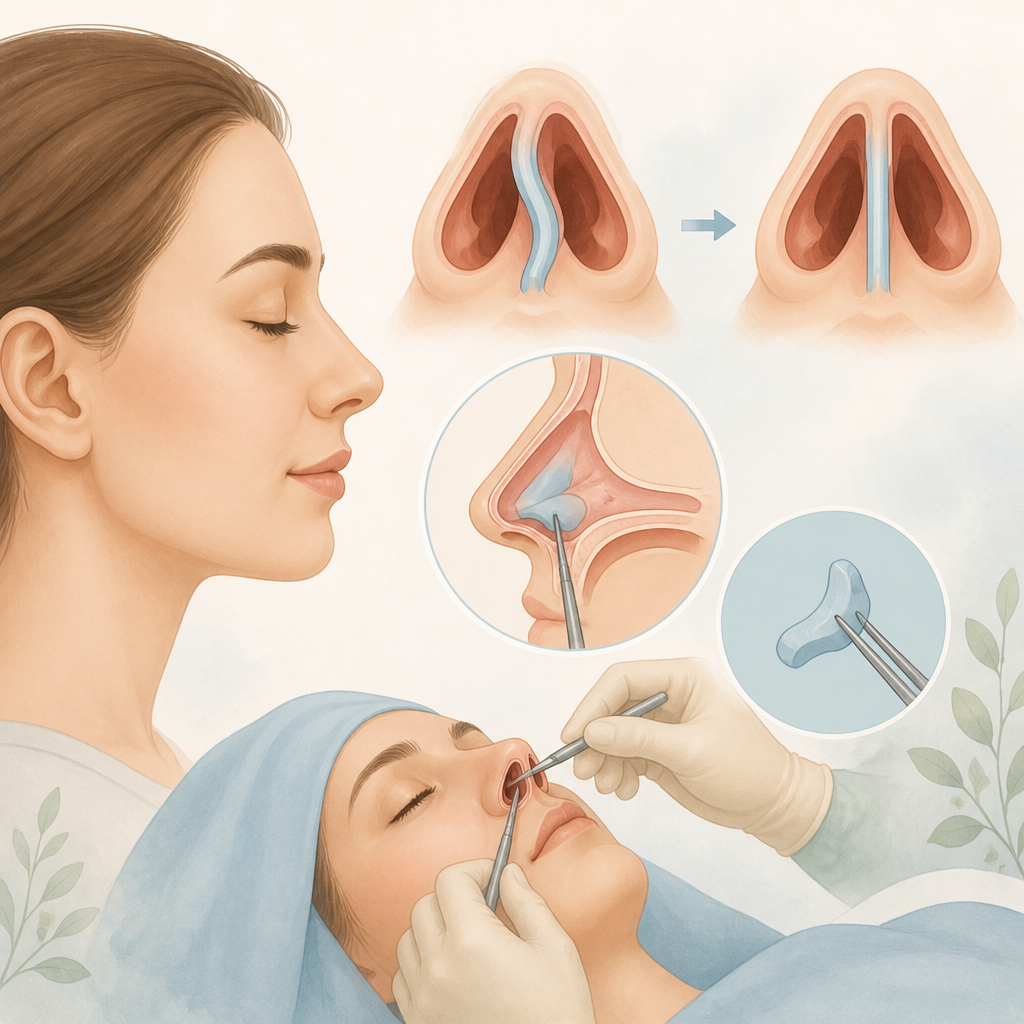
- Success rate
- 57% - 90%
- Avg cost (US)
- $3,500 - $9,000 (range)
- Recovery
- 7 - 43 days
- US volume / yr
- 250,000 - 500,000 (range)
Browse verified ent (otolaryngology) providers who offer this procedure.
This procedure helps individuals with nasal obstruction caused by a crooked or deviated septum. It is most effective for patients experiencing severe blockage rather than mild symptoms.
During the procedure, a surgeon trims, centers, and may replace cartilage or bone to straighten the nasal passage. It is typically an outpatient surgery focused on restoring airflow.
Initial healing generally takes one to two weeks. However, if turbinate surgery is also performed, full recovery can take up to six weeks. Most patients resume normal duties shortly after.
The cost of septoplasty varies based on insurance coverage, facility fees, and geographic location. Expect costs related to anesthesia, surgeon fees, and time off from work.
Questions to ask your doctor
- How much improvement in breathing can I realistically expect?
- Will you also be operating on my turbinates during this procedure?
- How many days of work or normal activity will I need to miss?
- What are the most common risks or complications you see in your practice?
- Will there be any visible changes to the outside shape of my nose?
Frequently asked
Recovery from a standalone septoplasty typically takes 7–16 days, but if combined with turbinate surgery, it may take 22–43 days.
Success depends on the severity of the deviation; patients with severe obstruction see the best results, while those with mild symptoms may see less improvement.
The primary goal is straightening the internal septum; while it involves cartilage and bone adjustment, it is not a cosmetic rhinoplasty.
Deep dive: Septoplasty 2026: Recovery, Costs, and What to Expect
Navigating chronic sinus issues or difficulty breathing can feel like a constant uphill battle. If you’ve spent years relying on nasal strips, steroid sprays, or decongestants just to get a good night’s sleep, you may have been told you have a "deviated septum." In 2026, septoplasty remains the gold standard for correcting this structural issue. This guide will walk you through what to expect from the procedure in today’s modern surgical landscape.
Who it's for
The septum is the thin wall of cartilage and bone that divides your nostrils into two equal halves. In a perfect world, it sits right down the middle, allowing air to flow freely through both sides. However, most people have a septum that is slightly off-center. For many, this tilt is minor and causes no issues.
Septoplasty is designed for patients where the "deviation" is significant enough to cause physical symptoms. You may be a candidate for septoplasty if you experience:
- Chronic nasal obstruction that doesn’t respond to allergy medications.
- Persistent mouth breathing, which often leads to dry mouth and dental issues.
- Recurrent sinus infections caused by poor drainage.
- Sleep apnea or heavy snoring that is exacerbated by nasal blockage.
- Frequent nosebleeds due to the drying out of a displaced septal surface.
In 2026, ENT specialists also use advanced diagnostic imaging to determine if your breathing issues are caused by the septum alone or if they are coupled with "turbinate hypertrophy" (swelling of the nasal lining). Often, these two conditions are treated simultaneously.
How it works
Septoplasty is a functional surgery, not a cosmetic one. Unlike a "nose job" (rhinoplasty), the goal is not to change how you look, but how you breathe. In most cases, the procedure is performed entirely through the nostrils, meaning there are no external incisions or visible scars.
The surgery typically takes 30 to 90 minutes and is performed under general anesthesia. Here is the modern approach:
- Access: The surgeon makes a small incision inside the nose to lift the mucosa—the protective membrane that covers the septum.
- Reshaping: Using micro-instruments or, in some modern clinics, precision laser or radiofrequency tools, the surgeon removes or repositions the obstructing bone and cartilage.
- Realignment: Once the septum is straightened, the mucosa is laid back down.
- Stabilization: In the past, surgeons used long strips of gauze (packing) that were painful to remove. Today, most surgeons use dissolvable stitches or small, internal plastic splints that allow you to breathe through your nose immediately after surgery.
Recovery & timeline
Recovery from septoplasty is significantly faster today than it was a decade ago. Because the procedure is typically outpatient, you will go home the same day.
- Days 1–3: This is the "congested phase." You will feel like you have a heavy cold. Expect some mild swelling and "stuffiness" as your body reacts to the surgery. You will likely be instructed to use saline rinses frequently to keep the area clean.
- Days 4–7: Most patients can return to remote work or light office duties. If your surgeon used internal splints, they are usually removed during a follow-up visit at the end of the first week. This is often described by patients as a moment of "instant relief."
- Weeks 2–4: You can gradually return to exercise. However, you must avoid contact sports or activities where you might take a hit to the nose.
- Full Healing: While your breathing improves almost immediately after the splints are out, the tissues take 3 to 6 months to fully settle into their new position.
Cost & insurance
Because septoplasty is a medically necessary procedure to improve breathing or treat chronic disease, it is generally covered by most private insurance plans, as well as Medicare and Medicaid.
However, "covered" does not always mean "free." Your out-of-pocket costs will depend on:
- Your deductible: The amount you pay before insurance kicks in.
- Co-insurance: Your percentage of the total bill.
- Facility fees: Costs vary between hospital-based surgery centers and independent outpatient clinics.
In 2026, many ENT offices provide transparent "bundle pricing" for those with high-deductible plans. On average, if paying out-of-pocket, the procedure can range from $3,000 to $6,000, depending on the complexity and the region. Always ask your provider for a "prior authorization" from your insurance company before the surgery date to ensure there are no surprises.
Risks & alternatives
Every surgery carries some risk. While septoplasty is considered a very safe, routine procedure, potential complications include:
- Bleeding: Minor oozing is normal, but heavy bleeding is rare.
- Infection: Managed with antibiotics.
- Septal Perforation: A small hole in the septum that can cause whistling or crusting (rare with modern techniques).
- Change in sense of smell: Usually temporary.
Alternatives to Surgery: Before recommending surgery, your ENT will likely suggest conservative treatments. These include nasal steroid sprays (like Flonase), antihistamines for allergy management, or nasal dilators. If these methods have failed to provide relief for at least 4–6 weeks, surgery is usually the next logical step.
How to choose a provider
The success of your septoplasty depends largely on the skill of your surgeon. When looking for a provider in 2026, consider the following:
- Board Certification: Ensure your surgeon is board-certified by the American Board of Otolaryngology. This ensures they have undergone rigorous training specifically in the anatomy of the head and neck.
- Technology: Ask if they use "image-guided" technology or "minimally invasive" techniques. These can lead to less tissue trauma and faster healing.
- Patient Reviews: Look for feedback specifically regarding the "bedside manner" and the clarity of the post-operative instructions.
- Sub-Specialization: Some ENTs specialize in "Rhinology"—a sub-field focused exclusively on the nose and sinuses. If your case is complex or a "revision" (a second surgery), a rhinologist is often the best choice.
Don't be afraid to ask how many septoplasties the surgeon performs each month. A surgeon who performs this procedure regularly is more likely to provide a predictable, successful outcome.
The goal of septoplasty is simple: to help you stop thinking about your breathing so you can focus on the rest of your life. By clearing the obstruction, you can enjoy better sleep, more energy, and an overall improvement in your quality of life.
If you are tired of struggling to breathe through your nose, contact our office today to schedule a diagnostic evaluation and see if septoplasty is right for you.
Related patient questions
Sources
- Prognostic factors for outcome after septoplasty in 888 patients from ...
- Septoplasty - Mayo Clinic
- Complications in septoplasty based on a large group of 5639 patients
- Introduction - Effectiveness of septoplasty compared to medical ...
- The State of the Art in Septoplasty: A Review of the Latest ... - PMC
Find a board-certified ent (otolaryngology) provider in your area.
General information only — not medical advice. Always consult a qualified clinician for your specific situation.