Sinus Surgery
Sinus surgery improves breathing by removing blockages and opening nasal passages. Learn about recovery, success rates, and what to expect during this…
- Success rate
- 87%–93% (range)
- Avg cost (US)
- $5,000–$15,000 (range)
- Recovery
- 7–14 days (range)
- US volume / yr
- 400,000–600,000 (range)
Browse verified ent (otolaryngology) providers who offer this procedure.
This procedure is designed for adults and children suffering from chronic rhinosinusitis, nasal polyps, or frontal sinus blockages that do not respond to medication. It helps patients achieve better airflow, fewer infections, and improved drainage.
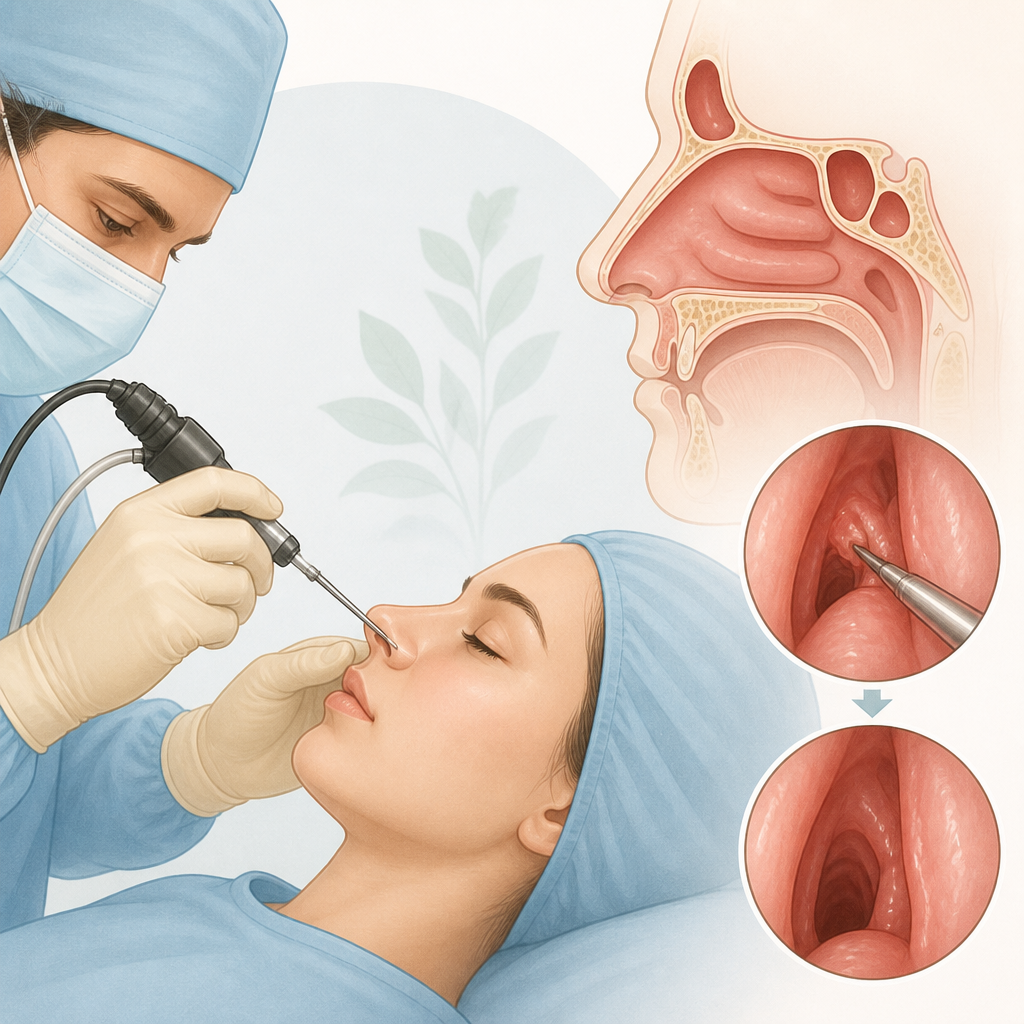
Most modern sinus surgeries are endoscopic, meaning the surgeon uses a tiny camera to clear obstructions without external incisions. The goal is precise sinus opening and mucosal preservation. You will likely be under general anesthesia and go home the same day.
Initial healing occurs over the first week, during which congestion and mild discomfort are common. Long-term results depend on follow-up care; some surgeons use specialized gels to reduce the risk of scarring and the need for future revision procedures.
Costs vary significantly based on insurance coverage, facility fees, and the specific complexity of the sinus involvement. Total expenses typically include surgeon fees, anesthesiology, and postoperative supplies.
Questions to ask your doctor
- What specific sinus cavities are being addressed in my procedure?
- Will you be using an endoscopic approach to preserve healthy tissue?
- What is your plan to prevent scarring or adhesions during healing?
- How often will I need postoperative debridement or cleaning visits?
- What are the chances I will need a revision surgery in the next five years?
Frequently asked
Data shows that 90.7% to 93% of patients do not require a revision surgery within five years, though individual results depend on underlying health conditions.
Yes, while adenoidectomy alone has success rates of 47%–61%, combining it with other sinus procedures increases success to 87%–92% in pediatric cases.
Yes, postoperative scarring can block sinus openings. Using advanced wound-healing gels may improve long-term outcomes and reduce the need for repeat surgery.
Deep dive: Sinus Surgery in 2026: Recovery, Benefits, and Modern Options
Choosing to undergo sinus surgery is often the final step in a long journey of congestion, facial pressure, and lost productivity. As we move into 2026, advancements in minimally invasive technology have transformed what used to be a daunting operation into a precise, outpatient procedure designed to help you breathe freely and stop the cycle of chronic infections.
This guide explains everything you need to know about the current state of sinus surgery, from the latest techniques to the financial considerations of modern healthcare.
Who it's for
Sinus surgery is rarely the first step in a treatment plan. Most patients who find themselves in an ENT’s office have already tried "medical management"—a combination of antibiotics, nasal steroid sprays, saline rinses, and allergy medications. When these treatments fail to provide lasting relief, surgery becomes the gold standard for restoring quality of life.
The most common candidates for surgery are those suffering from Chronic Rhinosinusitis (CRS). This is defined as sinus inflammation that lasts for 12 weeks or longer despite treatment. You may be a candidate if you experience a combination of:
- Persistent nasal blockage or "stuffiness" that makes mouth-breathing a necessity.
- Chronic facial pain or pressure, particularly around the eyes and forehead.
- Nasal polyps, which are non-cancerous growths that block the airways.
- A significantly diminished sense of smell or taste.
- Recurrent acute infections (getting "sinusitis" 4 or more times a year).
In 2026, surgeons also use advanced imaging to identify structural issues like a severely deviated septum or narrow drainage pathways that contribute to "vacuum headaches." If your anatomy is preventing your sinuses from draining naturally, surgery is often the only way to fix the plumbing.
How it works
The days of external incisions and "packing" the nose with yards of gauze are largely over. Modern sinus surgery, specifically Functional Endoscopic Sinus Surgery (FESS), is performed entirely through the nostrils.
Today’s surgeons utilize high-definition 4K endoscopes—tiny cameras that provide a crystal-clear view of the nasal passages. Many practices in 2026 also utilize "GPS-like" image guidance systems. Before surgery, a CT scan is uploaded into a computer; during the procedure, the surgeon uses a specialized probe that tracks their precise location within your unique anatomy in real-time, increasing safety and precision.
The primary goal is to remove small pieces of bone or inflamed tissue that are blocking the "ostia" (the natural drainage ports of the sinuses). By widening these openings, the sinuses can drain on their own, and medicated rinses can finally reach the deep tissues where they are needed.
A secondary, common technique is Balloon Sinuplasty. This is even less invasive and involves inserting a small catheter with a balloon into the sinus opening. The balloon is briefly inflated to restructure the bone and widen the path without removing any tissue. This is often performed in-office under local anesthesia.
Recovery & timeline
Recovery in 2026 is significantly faster than in decades past, thanks to the transition away from painful nasal packing toward "absorbable spacers" or medicated gels that dissolve on their own.
- Day 1-2: You will likely experience some "stuffiness" similar to a heavy cold. Blood-tinged discharge is normal. Most patients manage discomfort with over-the-counter relievers, though mild prescription pain meds may be provided.
- Day 3-7: Most patients return to light work or school. You will begin a regimen of saline nasal rinses (the "neti pot" style) to keep the passages moist and clear out debris.
- Week 2: You will have a post-operative visit where your ENT will perform "debridement," which is a quick cleaning of the nasal cavity to ensure scar tissue isn't forming.
- Week 4-6: Full healing is typically achieved. By this point, most patients report that they can breathe more deeply than they have in years.
It is crucial to avoid heavy lifting or strenuous exercise for at least 10 to 14 days, as increasing your heart rate can cause a nosebleed during the early healing phase.
Cost & insurance
The cost of sinus surgery varies significantly based on your geographic location, whether the procedure is done in a hospital or an in-office suite, and the complexity of the case.
In 2026, most major insurance providers, including Medicare, cover sinus surgery if it is deemed "medically necessary." This usually requires your doctor to document that you have tried medical therapy for at least 4-6 weeks without success and have a CT scan showing physical obstruction.
Out-of-pocket costs typically include your deductible and co-insurance. In-office Balloon Sinuplasty is generally the most cost-effective option, often costing the patient significantly less than a hospital-based surgery because there are no facility fees or general anesthesia costs. Always request a detailed cost estimate from your provider’s billing department and verify it with your insurance carrier before the procedure date.
Risks & alternatives
While sinus surgery has a high success rate (between 85% and 90%), no surgery is without risk. Because the sinuses are located near the eyes and the base of the brain, rare complications can include orbital (eye) injury or a cerebrospinal fluid (CSF) leak. More common but minor risks include temporary numbness of the upper teeth, scarring (synechiae), or a recurring infection.
If you are not ready for surgery, alternatives in 2026 include:
- Biologics: Injectable medications (like Dupixent) that target the underlying inflammation causing nasal polyps.
- Standard Maintenance: Continuing high-volume saline irrigation combined with compounded nasal "drops" containing antibiotics or steroids.
- Allergy Immunotherapy: Treating the root cause of the swelling through allergy shots or sublingual drops.
How to choose a provider
When selecting a surgeon, look for a Board-Certified Otolaryngologist. In 2026, many surgeons further specialize as "Rhinologists"—ENTs who have completed fellowship training specifically in the nose and sinuses.
During your consultation, ask the following questions:
- Do you use image-guidance navigation during the procedure?
- What is your protocol for post-operative care and follow-up?
- How many of these specific procedures do you perform annually?
- Am I a candidate for an in-office procedure, or do I require a surgical center?
A good provider will focus on a "staged" approach, ensuring surgery is only performed when it is the most effective path forward for your long-term health.
If you are tired of living with constant congestion and sinus pain, contact our office today to schedule a comprehensive evaluation and find out if sinus surgery is the right solution for you.
Related patient questions
Sources
- Revision rates and time to revision following endoscopic sinus surgery
- Chitogel improves long-term health economic outcomes following ...
- Outcomes after Frontal Sinus Surgery: An Evidence-Based Review
- Surgical Treatment of Paediatric Chronic Rhinosinusitis - PMC - NIH
- Revolutionizing chronic rhinosinusitis treatment with functional ...
Find a board-certified ent (otolaryngology) provider in your area.
General information only — not medical advice. Always consult a qualified clinician for your specific situation.