Tonsillectomy
Tonsillectomy is a common surgery to remove the tonsils to treat recurrent infections or breathing issues. Learn about the procedure, recovery, and costs in…
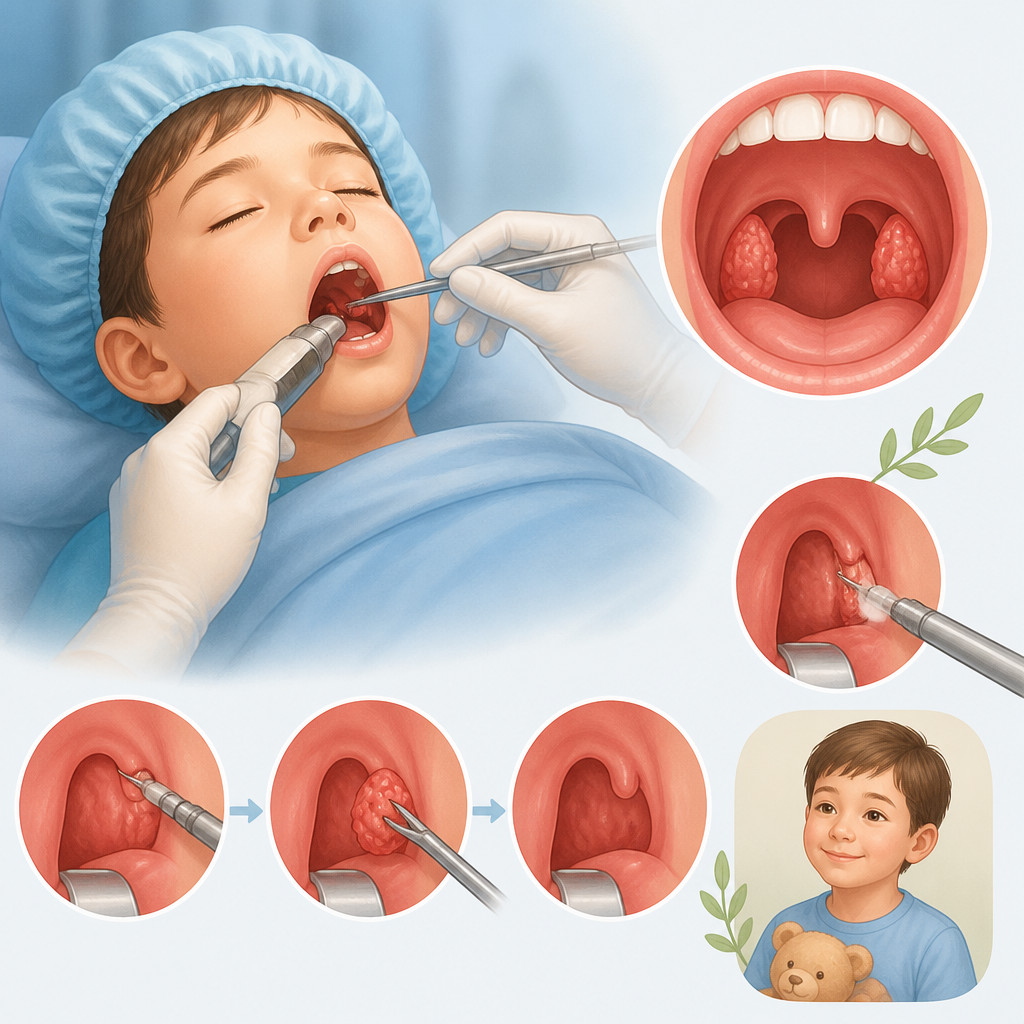
- Success rate
- 51%–83%
- Avg cost (US)
- $3,000–$7,000 (range)
- Recovery
- 10–14 days
- US volume / yr
- 500,000–600,000 (range)
Browse verified ent (otolaryngology) providers who offer this procedure.
This procedure is designed for children and adults suffering from chronic or recurrent tonsillitis, as well as those with pediatric obstructive sleep apnea caused by enlarged tonsils.
Performed under general anesthesia, a surgeon removes the tonsil tissue using various techniques. While operating time affects total cost, most patients return home the same day as surgery.
Recovery varies by technique; approximately 57% of patients feel fully recovered after two weeks. Pain typically improves after a few days, though a full return to activities may take longer.
Pricing depends largely on the surgical technique used and the total operating time. Note that some insurance plans may not cover partial removal methods like tonsillotomy.
Questions to ask your doctor
- Should I undergo a full tonsillectomy or a partial tonsillotomy?
- Will I be able to go home on the same day as the procedure?
- What are my options for managing pain in the first few days?
- Does my insurance cover the specific surgical technique you plan to use?
- What signs of complications should I watch for that might require readmission?
Frequently asked
Data shows the overall readmission rate is very low, at approximately 0.778%.
The cure rate for children undergoing this surgery for obstructive sleep apnea is reported between 51% and 83%.
About 57% of patients reported falling into the 'fully recovered' category two weeks after a total tonsillectomy.
Deep dive: Tonsillectomy Guide 2026: Recovery, Costs, and Patient Care
Medical advice disclaimer: The information provided in this post is for educational purposes only and is not intended as medical advice, diagnosis, or treatment. Always seek the advice of your physician or another qualified health provider with any questions you may have regarding a medical condition.
Tonsillectomy remains one of the most common surgical procedures performed in the United States. While many associate it strictly with childhood, the landscape of the procedure has evolved significantly by 2026. Advancements in surgical technology and a deeper understanding of sleep medicine have refined how and why we approach this surgery today.
Who it's for
Tonsillectomy is the surgical removal of the two oval-shaped pads of tissue at the back of the throat. In 2026, the criteria for this surgery are more precise than ever, focusing on two primary categories: infection and obstruction.
Chronic or Recurrent Tonsillitis: For patients who suffer from frequent strep throat or severe sore throats, surgery is often recommended. Current clinical guidelines typically suggest surgery if a patient has seven episodes in one year, five episodes per year for two consecutive years, or three episodes per year for three years.
Sleep-Disordered Breathing and OSA: This has become the leading reason for tonsillectomy in children and an increasing number of adults. If enlarged tonsils block the airway during sleep, it can lead to Obstructive Sleep Apnea (OSA), causing daytime fatigue, behavioral issues in children, and long-term cardiovascular strain in adults.
Tonsil Stones (Tonsilloliths): While often managed conservatively, some patients experience persistent, painful, or foul-smelling tonsil stones that do not respond to gargling or manual removal. If these stones significantly impact quality of life, a tonsillectomy may be the definitive solution.
Asymmetric Tonsils: If one tonsil is significantly larger than the other, an ENT may recommend removal to rule out more serious underlying conditions, though this is less common.
How it works
The "traditional" tonsillectomy has been replaced by more refined, "cold" and "hot" techniques that minimize blood loss and surrounding tissue damage. Most procedures in 2026 are performed in outpatient surgical centers under general anesthesia, typically taking between 30 to 45 minutes.
Electrocautery: This is the most common modern method, using heat to remove the tissue and seal blood vessels simultaneously. It is highly efficient and reduces the risk of bleeding during surgery.
Coblation: This high-tech approach uses radiofrequency energy to excite ions in a saline solution, creating a plasma field. This field dissolves the intercellular bonds of the tonsil tissue at much lower temperatures than traditional cautery. Patients often report slightly less postoperative pain with this method because there is less "thermal spread" to the surrounding throat muscles.
Intracapsular Tonsillectomy (Partial): In some pediatric cases where the goal is to treat sleep apnea rather than infection, surgeons may leave a thin layer of tonsil tissue over the throat muscles. This often results in a significantly faster recovery and less pain, though there is a very small risk of the tissue growing back.
Regardless of the method, your surgeon will ensure your airway is protected, and you will wake up in a recovery area under the supervision of specialized nursing staff.
Recovery & timeline
Recovery from a tonsillectomy is often described as a "U-shaped" experience. Most patients feel okay immediately after surgery due to the lingering effects of anesthesia and local numbing agents, feel worse between days 3 and 7, and then turn a corner toward rapid improvement.
Days 1-2: You will likely feel a moderate sore throat, similar to a bad case of tonsillitis. The priority here is hydration and staying ahead of the pain with scheduled medications.
Days 3-7: This is the peak recovery period. The "scabs" or fibrin membranes begin to form over the surgical sites. Ear pain (referred pain from the throat) is very common during this stage. It is vital to continue drinking fluids even if swallowing is uncomfortable.
Days 10-14: Most patients return to school or work during this window. The scabs gradually dissolve or slough off. You may notice a metallic taste in your mouth or bad breath; this is a normal part of the healing process.
Dietary Note: Gone are the days when you were forced to eat only ice cream. In 2026, the "as tolerated" diet is standard. While soft foods like yogurt, pudding, and lukewarm soup are easier, the most important factor is avoiding sharp, crunchy foods (like chips or crackers) that could scrape the healing tissue.
Cost & insurance
In 2026, the cost of a tonsillectomy varies based on the facility (hospital vs. ambulatory surgery center) and your geographic location. On average, the total cost for the surgeon, facility, and anesthesiologist ranges from $3,500 to $7,000 for those paying out-of-pocket.
Insurance Coverage: Most private insurance plans and Medicaid cover tonsillectomy when clinical necessity is documented. This usually requires your ENT to provide a history of infections or a sleep study (polysomnogram) confirming sleep apnea.
Deductibles and Co-pays: Because this is an outpatient surgery, you may be responsible for a facility co-pay or a percentage of the "allowable amount" until your deductible is met. It is highly recommended to request a "Good Faith Estimate" from your provider’s billing department and verify with your insurance carrier that the surgical center is in-network.
Risks & alternatives
Every surgery carries risks, and it is important to weigh these against the benefits of the procedure.
Bleeding: The primary risk of tonsillectomy is post-operative bleeding (hemorrhage). This occurs in roughly 2-3% of patients, usually between days 5 and 10 when the scabs fall off. If significant bleeding occurs, a return to the operating room may be necessary to cauterize the area.
Dehydration: Especially in children, the pain of swallowing can lead to a refusal to drink, sometimes requiring a brief hospital stay for IV fluids.
Alternatives: Surgery is rarely the first step. For chronic infections, a "watchful waiting" period or changes in oral hygiene may be suggested. For sleep apnea, weight loss, nasal steroid sprays, or CPAP (Continuous Positive Airway Pressure) therapy are potential alternatives to surgery, especially in adults.
How to choose a provider
When selecting an ENT for a tonsillectomy in 2026, consider the following factors:
Board Certification: Ensure your surgeon is board-certified by the American Board of Otolaryngology – Head and Neck Surgery.
Specialization: If the patient is a child, a Pediatric ENT who operates in a children’s hospital may be preferable, as they have specialized pediatric anesthesiologists and child-friendly recovery teams.
Technology and Technique: Ask the surgeon which method they use (e.g., Coblation vs. Electrocautery) and why they prefer it for your specific case.
Facility Quality: Check the safety ratings of the surgical center where the procedure will be performed. Outpatient centers often have lower infection rates and more personalized care than large general hospitals.
Patient Rapport: Recovery can be a two-week process. You want a surgeon whose office is responsive to calls and emails during the recovery phase should you have questions about pain management or healing.
If you are tired of chronic throat infections or poor sleep quality, contact our office today to book a consultation with one of our board-certified ENT specialists.
Related patient questions
Sources
- Time to Functional Recovery After Laser Tonsillotomy Performed ...
- Tonsillectomy-Comparative Study of Various Techniques and ... - PMC
- Is Day Care Tonsillectomy a Safe Procedure? - PMC - NIH
- When is tonsil surgery a good idea in adults? - InformedHealth.org
- Considerations in Surgical Management of Pediatric Obstructive ...
Find a board-certified ent (otolaryngology) provider in your area.
General information only — not medical advice. Always consult a qualified clinician for your specific situation.