Hip Replacement
Learn about hip replacement surgery recovery and costs. Most patients achieve significant pain relief and return to normal activities within three months.
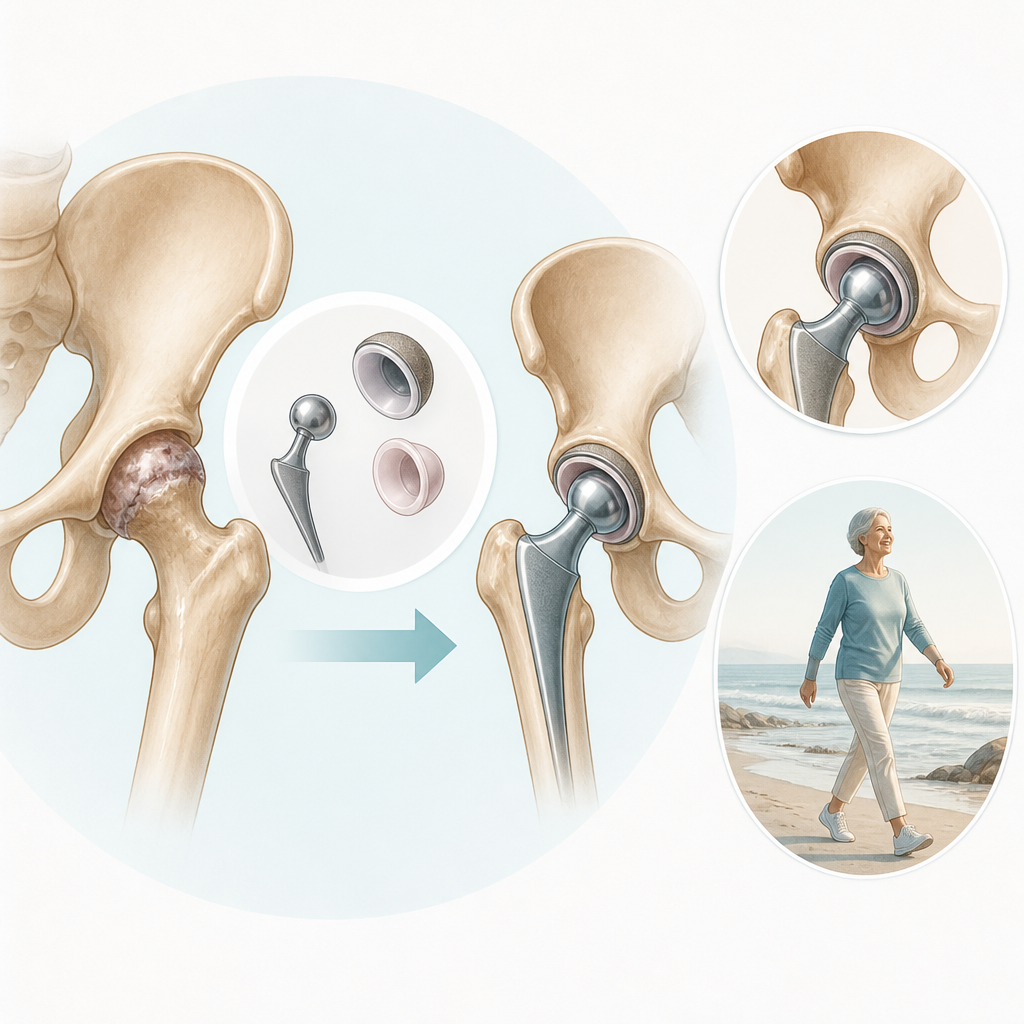
- Success rate
- 90%–95%
- Avg cost (US)
- $30,000–$55,000 (range)
- Recovery
- 90 days
- US volume / yr
- 450,000–600,000 (range)
Browse verified orthopedic surgery providers who offer this procedure.
This procedure is designed for individuals suffering from severe hip pain or joint damage that limits daily activities, often caused by conditions like arthritis or injury.
During the procedure, a surgeon removes damaged bone and cartilage, replacing them with prosthetic components. Patients often experience a significant reduction in chronic pain shortly after surgery.
While early mobility is encouraged, full recovery varies. Most patients report doing well and resuming standard activities by the three-month mark following the operation.
The cost of the procedure can vary depending on the facility and location, with some hospital reimbursements reaching approximately $50,000.
Questions to ask your doctor
- What are the specific risks based on my medical history?
- Should I have my hip or my knee replaced first?
- Will this be performed as an outpatient or inpatient procedure?
- How soon after surgery can I begin physical therapy?
- What kind of prosthetic material will be used for my new joint?
Frequently asked
Approximately 90 to 95 percent of patients experience almost total relief from hip pain following the surgery.
The estimated risk of mortality is very low, at approximately 0.30% within the first 30 to 90 days after the procedure.
While individual timelines vary, most patients are doing well and have reached a significant stage of recovery three months after surgery.
Deep dive: Total Hip Replacement in 2026: Recovery, Tech & Patient Guide
Notice: This information is for educational purposes only and does not constitute medical advice. Always consult with a qualified healthcare professional regarding your specific condition and treatment options.
Who it's for
Hip replacement surgery, or total hip arthroplasty, is primarily designed for individuals whose quality of life has been significantly diminished by chronic hip pain and loss of mobility. By 2026, advancements in materials and surgical technology have made this procedure common not just for seniors, but for active middle-aged adults and even younger patients dealing with congenital issues.
The most common reason for a replacement is osteoarthritis—the "wear and tear" of the cartilage that cushions the joint. When this cushion disappears, bone rubs against bone, causing inflammation and stiffness. Other candidates include those suffering from:
- Rheumatoid arthritis (an autoimmune condition).
- Post-traumatic arthritis (damage caused by a previous injury or fracture).
- Avascular necrosis (death of bone tissue due to lack of blood supply).
- Ankylosing spondylitis.
You might be a candidate if you find that pain prevents you from performing daily tasks like putting on socks, climbing stairs, or walking short distances. Generally, surgeons recommend this procedure when conservative treatments—such as physical therapy, weight management, and anti-inflammatory medications—no longer provide relief.
How it works
The goal of a hip replacement is to remove the damaged sections of the hip joint and replace them with durable artificial components. The hip is a "ball and socket" joint. During the surgery, the surgeon removes the damaged "ball" (the head of the femur) and replaces it with a metal or ceramic stem that is placed into the hollow center of the thighbone. A prosthetic ball is then attached to the top of this stem.
The "socket" (acetabulum) is also cleared of damaged cartilage and fitted with a durable metal shell. A spacer, usually made of high-grade plastic (polyethylene) or ceramic, is inserted between the new ball and socket to allow for a smooth, gliding motion.
In 2026, many surgeons utilize "Robotic-Assisted Surgery" and 3D preoperative modeling. This allows for extreme precision in positioning the implants, which can lead to a more natural feeling in the hip and potentially longer-lasting results. Depending on your anatomy, your surgeon may use the "Anterior Approach" (incising through the front) or the "Posterior Approach" (incising through the back/side). The anterior approach is popular today because it spares the major muscles, often leading to a faster initial recovery.
Recovery & timeline
Recovery in 2026 is faster than ever before. Many patients now undergo "outpatient" hip replacements, meaning they return home the same day as the surgery.
- Days 1–2: You will be encouraged to stand and walk with a walker or crutches within hours of the procedure. Managing pain through a "multimodal" approach (using various types of non-opioid medications) is the standard to keep you moving early.
- Weeks 1–3: You will focus on wound healing and gentle physical therapy. Most patients transition from a walker to a cane during this time. You will practice getting in and out of chairs and navigating stairs.
- Weeks 4–6: Many patients return to sedentary office work and begin driving again (if the surgery was not on their driving leg or if they are off narcotic pain killers). Balance and strength training become the focus.
- Months 3–6: Most restrictions are lifted. You can typically return to low-impact sports like swimming, cycling, and golf.
- One Year: The joint is usually fully integrated, and the surrounding muscles have regained their strength.
Modern recovery also focuses on "Pre-hab"—exercises you do before surgery to strengthen your body, making the post-surgical transition much smoother.
Cost & insurance
The cost of a hip replacement can vary widely based on your geographic location, the specific technology used (such as robotics), and whether the procedure is performed in a hospital or an ambulatory surgery center (ASC).
In 2026, insurance coverage for hip replacement is robust, as it is considered a medically necessary procedure for those with documented joint failure. Medicare and most private insurers cover the bulk of the cost, provided you have exhausted conservative treatments first.
However, you should be aware of:
- Deductibles and Co-pays: Even with insurance, your out-of-pocket costs can range from $1,500 to $5,000 or more depending on your plan.
- Facility Fees: Procedures done in a hospital are generally more expensive than those done in specialized surgery centers.
- Post-Surgical Costs: Budget for physical therapy sessions and any specialized equipment you might need at home, like a raised toilet seat or a shower chair.
Always request a "Good Faith Estimate" from your provider and verify with your insurance company that the surgeon and the facility are "in-network" to avoid surprise bills.
Risks & alternatives
While hip replacement has a success rate of over 95%, it is still a major surgery with inherent risks. These include:
- Infection: Though rare, an infection in the joint can be serious.
- Blood Clots: Surgeons prescribe blood thinners and movement protocols to prevent this.
- Leg Length Discrepancy: While surgeons use digital imaging to prevent this, there can sometimes be a slight difference in leg length.
- Dislocation: The new ball can pop out of the socket, though modern implants have made this much less common.
Before committing to surgery, ensure you have tried these alternatives:
- Physical Therapy: Strengthening the muscles around the hip can take the pressure off the joint.
- Weight Loss: Reducing body weight significantly lowers the load on the hip.
- Injections: Corticosteroid or hyaluronic acid injections can provide temporary relief from inflammation.
- Biological Treatments: Some patients explore platelet-rich plasma (PRP) or stem cell therapies, though these are often not covered by insurance and are generally more effective for early-stage wear rather than advanced arthritis.
How to choose a provider
Choosing the right surgeon is the most critical factor in your outcome. When researching providers, look for these markers of quality:
Board Certification and Specialization: Ensure your surgeon is board-certified in orthopedic surgery and ideally has completed a "Fellowship" specifically in adult reconstructive surgery (joint replacement).
Volume Matters: Research shows that surgeons who perform a high volume of hip replacements (more than 50-100 per year) typically have lower complication rates and better patient outcomes.
Technology and Technique: Ask if they utilize robotic assistance or navigation systems and which surgical approach (anterior vs. posterior) they recommend for your specific body type.
Patient Reviews and Data: Look for transparency. Does the clinic track "Patient-Reported Outcome Measures" (PROMs)? A provider who measures their own success through patient feedback is often more committed to continuous improvement.
Comfort Level: You should feel heard. A good surgeon will explain the risks clearly, not rush you into a decision, and have a dedicated team (physician assistants and nurses) to support your recovery.
If you are ready to reclaim your mobility and live a life free from chronic hip pain, contact our office today to book your personalized surgical consultation.
Related patient questions
- When should I consider joint replacement?
- How long does knee replacement surgery take?
- How long is recovery from total knee replacement?
- How long does hip replacement recovery take?
- How much does hip replacement cost?
- How long is recovery from total knee replacement?
- How long does hip replacement recovery take?
- How much does hip replacement cost?
Sources
Find a board-certified orthopedic surgery provider in your area.
Related procedures
General information only — not medical advice. Always consult a qualified clinician for your specific situation.