Carpal Tunnel Surgery
Carpal tunnel surgery relieves hand pain and numbness by releasing pressure on the median nerve. Most patients see significant symptom improvement within…
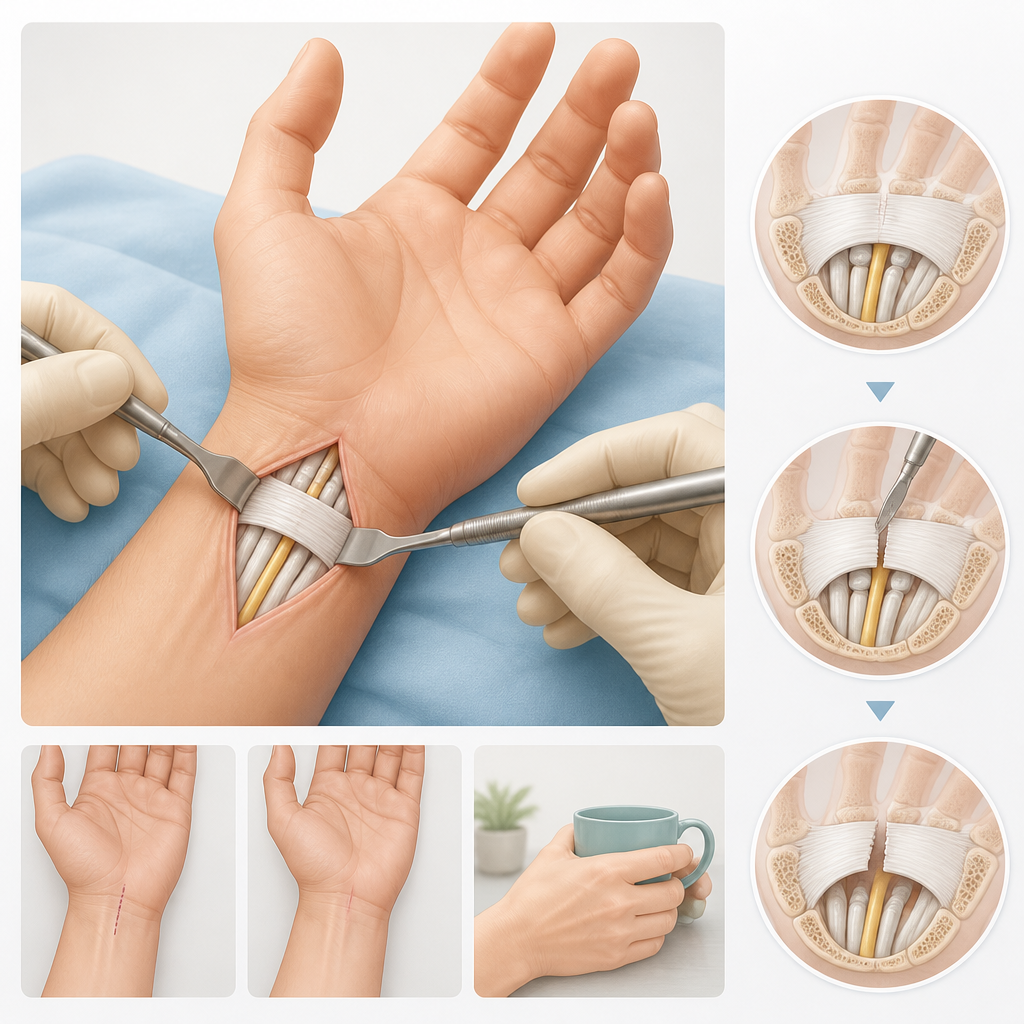
- Success rate
- 75% - 93.3% (range)
- Avg cost (US)
- $3,000 - $7,000 (range)
- Recovery
- 165 days (mean)
- US volume / yr
- 400,000 - 600,000 (range)
Browse verified orthopedic surgery providers who offer this procedure.
This procedure is designed for individuals experiencing persistent hand numbness, tingling, or weakness caused by carpal tunnel syndrome, typically when non-surgical treatments like splinting are no longer effective.
During the procedure, a surgeon cuts the transverse carpal ligament to create more space for the median nerve. It is usually performed as an outpatient surgery using either an open incision or a minimally invasive endoscopic approach.
While early symptoms may improve quickly, the average time to feel fully recovered is approximately 5.5 months. Strength and comfort typically continue to improve throughout the first year following the procedure.
Costs vary significantly based on the surgical facility, geographical location, and whether the approach is open or endoscopic; consult your provider for specific pricing.
Questions to ask your doctor
- Which surgical technique do you recommend for my specific case?
- How soon can I expect to return to work and daily activities?
- What are the specific risks or chances of recurrence for me?
- Will I need physical therapy or specialized hand therapy after surgery?
- How long does it typically take for grip strength to return to normal?
Frequently asked
Recurrence is rare; research indicates a revision rate of approximately 0.7% within the first two years and 0.3% in later years.
Recovery is a gradual process. While many feel better quickly, studies show about 11.8% of patients may not feel fully recovered by the one-year mark.
Yes, clinical success rates are high, with research showing that over 90% of patients experience significant symptom improvement.
Deep dive: Carpal Tunnel Surgery: 2026 Recovery Guide & Expectations
Disclaimer: The information in this blog post is for educational purposes only and does not constitute medical advice, diagnosis, or treatment. Always seek the advice of a physician or other qualified health provider with any questions you may have regarding a medical condition.
Who it's for
Carpal tunnel syndrome (CTS) remains one of the most common nerve-related conditions in 2026, often fueled by our continuous interaction with digital devices and repetitive manual tasks. But how do you know if you are a candidate for surgery?
Carpal tunnel surgery, or carpal tunnel release, is primarily for individuals who have not found relief through conservative treatments like wrist splinting, physical therapy, or corticosteroid injections. You may be a candidate if you experience persistent numbness or "pins and needles" in the thumb, index, and middle fingers that wakes you up at night.
In more advanced cases, surgery is recommended for those experiencing muscle atrophy at the base of the thumb or significant loss of grip strength. Doctors prioritize surgical intervention when diagnostic tests, such as Electromyography (EMG) or nerve conduction studies, show that the median nerve is being severely compressed. If your symptoms are interfering with your ability to perform daily tasks or sleep, surgery is often the most effective way to prevent permanent nerve damage.
How it works
The goal of carpal tunnel surgery is simple: to relieve pressure on the median nerve. This nerve travels through a narrow passageway in your wrist called the carpal tunnel, which is formed by bones and a tough band of tissue called the transverse carpal ligament. When this ligament presses down on the nerve, it causes pain and numbness. During surgery, the surgeon cuts (releases) this ligament to create more space in the tunnel.
In 2026, patients typically choose between two primary methods:
- Open Release: A small incision is made in the palm of the hand. The surgeon directly views the ligament and cuts it with a scalpel. This is the traditional, time-tested approach.
- Endoscopic Release: This is a minimally invasive technique where the surgeon makes one or two tiny incisions and inserts a small camera (endoscope) to see inside the wrist. A tiny blade is then used to cut the ligament from the inside. This often results in less immediate post-operative pain and a faster return to daily activities.
Both procedures are usually performed on an outpatient basis under local anesthesia or "twilight" sedation, meaning you can return home the same day.
Recovery & timeline
Recovery from carpal tunnel surgery is a marathon, not a sprint, though modern rehabilitation protocols have become much more efficient.
- Days 1-3: Your hand will be bandaged, and you may be in a splint. You are encouraged to move your fingers immediately to prevent stiffness, but you must keep the incision site dry and elevated to reduce swelling.
- Weeks 1-2: Stitches are typically removed if they aren't the dissolvable kind. You can start light tasks like typing or eating, but heavy lifting is strictly prohibited.
- Weeks 3-6: Most patients return to light office work. Strength begins to return, though "pillar pain" (soreness in the palm) is common as the scar tissue matures.
- 3-6 Months: This is the window for full recovery. While the skin heals quickly, the deep tissues and the nerve itself take longer to regenerate. You will likely notice a significant improvement in grip strength and the total disappearance of nighttime numbness.
In 2026, many surgeons integrate wearable recovery trackers and digital therapy apps that guide you through daily hand exercises to ensure the best functional outcome.
Cost & insurance
The cost of carpal tunnel surgery in 2026 varies based on the technique used and the facility where the procedure is performed. On average, the cost ranges from $2,500 to $7,000 per hand.
In most cases, carpal tunnel surgery is considered a medically necessary procedure, not an elective one. Therefore, it is covered by the majority of private insurance plans, as well as Medicare and Medicaid, provided you have a documented history of symptoms and have failed conservative treatments.
However, patients should be mindful of their specific plan’s deductible and out-of-pocket maximums. Endoscopic surgery, while faster to recover from, sometimes carries a higher facility fee due to the specialized equipment required. Always request a "Good Faith Estimate" from your provider before the procedure to avoid surprises in your billing.
Risks & alternatives
Like any surgical procedure, carpal tunnel release carries some risks, though they are statistically low. Potential complications include infection, scarring, or injury to the median nerve or surrounding blood vessels. Some patients may also experience "incomplete release," where symptoms persist because the ligament wasn't fully severed.
Before committing to the operating room, it is worth discussing modern alternatives with your surgeon. In 2026, Ultrasound-Guided Thread Carpal Tunnel Release (TCTR) has become a popular ultra-minimally invasive alternative that requires no large incisions and allows for an even faster return to work.
Other alternatives include:
- Hydrodissection: Using fluid injected under ultrasound guidance to create space around the nerve.
- Advanced Ergonomics: High-tech bracing and workstation modifications.
- Platelet-Rich Plasma (PRP) Injections: Using the body’s own growth factors to calm nerve inflammation.
How to choose a provider
Choosing the right surgeon is the most important step in your journey toward a pain-free hand. You should look for a board-certified orthopedic surgeon or a plastic surgeon who specializes specifically in Hand and Upper Extremity surgery.
When interviewing a provider, ask the following questions:
- How many carpal tunnel releases do you perform each year?
- Do you prefer the open or endoscopic approach for my specific anatomy?
- What is your complication rate, and how do you handle post-operative pain?
- Do you provide in-house occupational therapy or hand therapy?
In 2026, patient outcomes and reviews are more transparent than ever. Check reputable medical rating sites and ask for a clear breakdown of the post-operative support the clinic offers. The best surgeons are those who provide a comprehensive care plan that includes not just the surgery, but a structured rehabilitation program to ensure your hand regains its full utility.
If you are tired of the numbness and ready to regain your grip, contact our office today to book your carpal tunnel consultation.
Related patient questions
- What is the success rate of rotator cuff repair?
- How long does carpal tunnel surgery take?
- How long is recovery from carpal tunnel release?
- How much does carpal tunnel surgery cost?
- Endoscopic vs open carpal tunnel release?
- How long is recovery from carpal tunnel release?
- How much does carpal tunnel surgery cost?
- Endoscopic vs open carpal tunnel release?
Sources
- Long-term outcomes of carpal tunnel release: a critical review ... - PMC
- Comparing the Efficacy of Endoscopic Carpal Tunnel Repair Versus ...
- Mayo Clinic Q and A: Recovery after surgery for carpal tunnel ...
- Rates of Complications and Secondary Surgeries of Mini-Open ...
- Patient-Perceived Time to Recovery After Carpal Tunnel Release
Find a board-certified orthopedic surgery provider in your area.
Related procedures
General information only — not medical advice. Always consult a qualified clinician for your specific situation.