Kidney Stone Removal
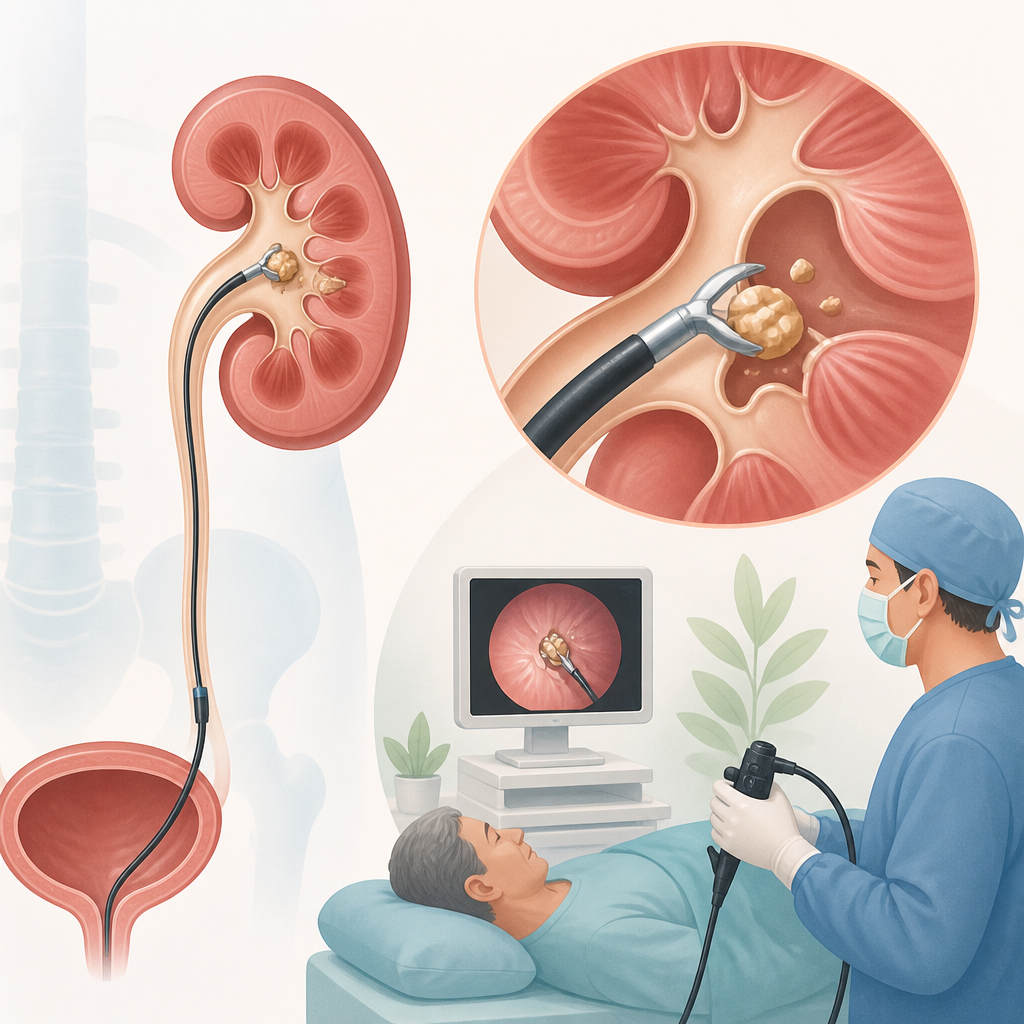
Kidney stone removal involves various procedures to break up or remove mineral deposits from the urinary tract. Common methods include Ureteroscopy (using a…
- Success rate
- 70% to 98% (range)
- Avg cost (US)
- $1,200 - $3,200 (range)
- Recovery
- 1 - 2 days (range)
- US volume / yr
- 500,000 - 1,000,000 (range)
Browse verified urology providers who offer this procedure.
These procedures are designed for individuals with stones in the kidney or ureter that are too large to pass naturally, causing significant pain, or obstructing urine flow. It is effective across age groups, including patients over 70 years old.
Patients typically undergo the procedure in a hospital or surgical center. Depending on the method, surgeons may use lasers to fragment stones or shockwaves (limited to 3,000–4,000 shocks per session) to break them down. Many of these treatments are performed as 'day cases,' meaning you may go home the same day.
Recovery is relatively quick for most. Evidence shows that approximately 73% to 89% of patients are discharged within 24 hours of the procedure. Patients may experience mild discomfort while passing small stone fragments or if a temporary stent is placed.
The cost varies based on equipment; procedural costs for ureteroscopy typically range from $1,212 to $3,180 (range), though total hospital billing may be higher.
Questions to ask your doctor
- Which procedure (Laser, RIRS, or ESWL) is most effective for my stone's location?
- Will I be able to go home the same day the procedure is performed?
- Is a single session usually enough to be completely stone-free?
- Are you using single-use or reusable equipment for this procedure?
- What is the plan if the stone is in the proximal vs. distal ureter?
Frequently asked
Success rates are high, with total stone clearance rates reaching between 83% and 98% depending on the specific technique used.
Yes. Stone-free rates can vary by location: roughly 84.5% for the proximal (upper) ureter, 89.4% for the middle, and 94.2% for the distal (lower) ureter.
Yes, research indicates these procedures are effective for patients aged 70 and older, with final stone-free rates reaching up to 97%.
For safety, a single kidney typically receives a maximum of 3,000 to 4,000 shocks per session.
Deep dive: Kidney Stone Removal: 2026 Treatment Guide & Recovery Tips
Medical Disclaimer: The information in this blog post is for educational purposes only and does not constitute medical advice. Always seek the advice of your physician or other qualified health provider with any questions you may have regarding a medical condition.
Who it's for
Kidney stones are small, hard mineral deposits that form inside your kidneys, and in 2026, they remain one of the most common reasons patients visit a urologist. While some stones are small enough to pass naturally through your urine, others become "obstructed" or are simply too large to move.
Kidney stone removal procedures are typically recommended for patients who fall into three categories. First are those experiencing acute, debilitating pain (renal colic) that cannot be managed with over-the-counter medications. Second are patients whose stones are causing a blockage that could lead to a kidney infection or permanent kidney damage. Finally, elective removal is often recommended for patients with larger stones—typically over 5 to 7 millimeters—that are unlikely to pass on their own, or for individuals in certain professions, like pilots or high-altitude workers, where a sudden pain crisis could be dangerous.
If you are experiencing sharp pain in your back or side, blood in your urine, or a persistent urge to urinate, you may be a candidate for a removal procedure.
How it works
Modern urology in 2026 focuses on "minimally invasive" and "non-invasive" techniques. The days of large abdominal incisions for stones are largely over. Depending on the size and location of your stone, your urologist will typically recommend one of three primary methods:
Shock Wave Lithotripsy (SWL): This is the least invasive option. You lie on a specialized table, and a machine uses ultrasound or X-ray to pinpoint the stone. It then sends high-energy shock waves through your body to shatter the stone into tiny "dust" or gravel-like pieces that you can pass naturally. No incisions or scopes are required.
Ureteroscopy (URS): This is the most common procedure today. A thin, flexible telescope (ureteroscope) is passed through the urethra and bladder into the ureter. Once the stone is located, a tiny laser fiber—often using the latest "Thulium Fiber Laser" technology—pulverizes the stone into dust. A small temporary tube called a stent is often left in the ureter to ensure urine can flow while the area heals.
Percutaneous Nephrolithotomy (PCNL): For very large or complex stones (often called "staghorn" stones), a small incision is made in the back. A tube is inserted directly into the kidney, and specialized instruments break up and suction out the stone fragments.
Recovery & timeline
Recovery varies based on the procedure, but most patients are pleasantly surprised by how quickly they return to their routine.
For Lithotripsy, you usually go home the same day. You might feel some soreness in the treatment area and see a little blood in your urine for 24 to 48 hours. Most people return to work within 1 to 2 days.
For Ureteroscopy, it is also typically an outpatient procedure. The primary recovery factor is the "stent." While the stent protects your kidney, it can cause a frequent urge to urinate or some mild cramping. Most urologists now use "tethered" stents that you can easily remove at home after 3 to 7 days. Once the stent is out, you'll feel significantly better almost immediately.
For PCNL, you may spend one night in the hospital for observation. Full recovery and a return to heavy lifting or strenuous exercise usually take about 1 to 2 weeks.
In all cases, the "2026 gold standard" for recovery involves aggressive hydration. You will be encouraged to drink 3 to 4 liters of water a day to flush out any remaining fragment dust.
Cost & insurance
The cost of kidney stone removal depends heavily on the complexity of the stone and the facility where the procedure is performed. In 2026, many of these procedures have shifted from high-cost hospitals to specialized Ambulatory Surgery Centers (ASCs), which can significantly lower out-of-pocket costs for patients.
Most major insurance providers, including Medicare and private PPO/HMO plans, cover kidney stone removal because it is considered a medically necessary procedure to prevent infection and organ damage. However, you will likely be responsible for your deductible and your specific coinsurance percentage.
It is important to ask your provider’s billing office for a "Global Fee" estimate, which includes the surgeon’s fee, the anesthesiologist’s fee, and the facility fee. Additionally, check if your insurance requires "Prior Authorization," a common step in 2026 to ensure the procedure meets their criteria for medical necessity.
Risks & alternatives
While kidney stone procedures are highly successful, no surgery is without risk. Common risks include minor bleeding, urinary tract infections (UTI), or temporary swelling that makes it difficult to urinate. In rare cases, the ureter can be injured during a scope procedure, or a stone fragment can become lodged, requiring a follow-up visit.
Alternatives to Surgery: If your stone is small (under 5mm) and your pain is manageable, your doctor may suggest "Medical Expulsive Therapy." This involves taking a medication (like an alpha-blocker) that relaxes the muscles in your ureter to help the stone slide through more easily.
Another alternative is specialized "Active Surveillance," where we monitor the stone with periodic ultrasounds to see if it grows or moves, though this carries the risk of the stone causing a sudden emergency later on.
How to choose a provider
When selecting a urologist for stone removal in 2026, you should look for three key factors:
- Technology: Ask if the provider utilizes Thulium Fiber Lasers or digital high-definition ureteroscopes. These tools often result in higher "stone-free rates" (the likelihood that every piece of the stone is gone).
- Volume: Experience matters. Surgeons who perform stone removals weekly are more adept at navigating complex anatomy and managing potential complications.
- Metabolic Follow-up: A great provider doesn't just remove the stone; they help you prevent the next one. Look for a practice that offers 24-hour urine collection analysis and personalized dietary counseling after your procedure.
Ultimately, you want a provider who offers a clear communication channel—such as a secure patient portal—so you can quickly ask questions during your recovery period.
If you are ready to find relief from kidney stone pain and want to discuss which modern removal technique is right for you, contact our office today to book a consultation.
Related patient questions
Sources
- Recent advances in the treatment of renal stones using flexible ...
- Success rate and complications of performing elective ureteroscopy ...
- Effectiveness and safety of retrograde intrarenal surgery (RIRS) vs ...
- Extracorporeal Shockwave Lithotripsy - StatPearls - NCBI Bookshelf
- Ureteroscopy and stone treatment in the elderly (≥70 years) - PMC
Find a board-certified urology provider in your area.
Related procedures
General information only — not medical advice. Always consult a qualified clinician for your specific situation.