Rhinoplasty
Rhinoplasty is a common surgery to change the nose's shape or improve breathing. Learn about the procedure, recovery times, costs, and success rates for 2026.
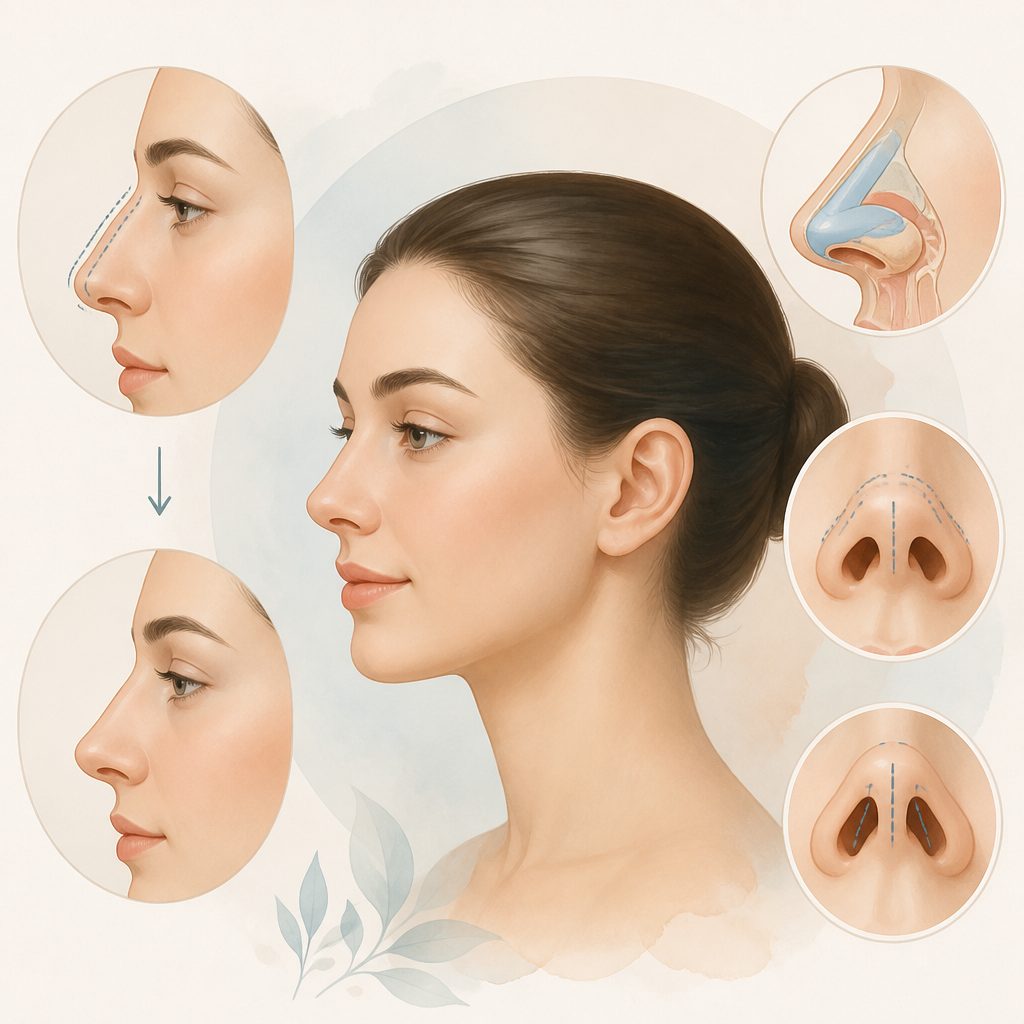
- Success rate
- 85% - 97% (range)
- Avg cost (US)
- $5,000 - $15,000 (range)
- Recovery
- 7 - 14 days
- US volume / yr
- 200,000 - 350,000 (range)
Browse verified facial plastic surgery providers who offer this procedure.
This procedure helps individuals looking to change the size, shape, or proportions of their nose, as well as those seeking to repair deformities from an injury or improve breathing by correcting structural issues.
The surgery is typically performed under general anesthesia or local anesthesia with sedation. Surgeons use an 'open' or 'closed' approach to reshape bone and cartilage. You may see a digital preview of your potential results before the procedure.
Most patients return to light activities in about a week. You may experience swelling and bruising for several days. While the initial recovery is quick, the final shape of your nose may continue to refine for up to a full year.
Costs vary significantly based on the surgeon's expertise, geographic location, and whether the procedure is for aesthetic or functional reasons.
Questions to ask your doctor
- Are you board-certified by the American Board of Plastic Surgery?
- Can I see before-and-after photos of your previous patients?
- Will you use an open or closed surgical technique for my goals?
- How do you handle breathing issues during a cosmetic procedure?
- What is your specific policy regarding surgical revisions?
Frequently asked
Studies show revision rates for primary rhinoplasty generally fall between 3.1% and 15%.
Yes, many clinics use imaging software to show you what your nose might look like after the procedure.
Insurance may cover functional parts of the surgery, such as correcting a deviated septum, but typically does not cover cosmetic changes.
Deep dive: 2026 Rhinoplasty Guide: Trends, Recovery & Natural Results
Whether you are looking to improve your breathing or enhance the balance of your facial features, rhinoplasty—commonly known as a nose job—remains one of the most transformative procedures in facial plastic surgery. As we move into 2026, the field has evolved significantly, moving away from "cookie-cutter" results toward highly personalized, structural harmony that prioritizes both form and long-term nasal health.
Choosing to undergo rhinoplasty is a major decision. This guide is designed to help you navigate the modern landscape of the procedure, from the latest surgical techniques to what you can expect during your recovery journey.
Who it's for
Rhinoplasty is rarely about achieving "perfection." Instead, it is about creating a nose that looks natural and functions perfectly within the context of your unique face. Generally, patients seek this procedure for two primary reasons: aesthetic goals or functional needs.
On the aesthetic side, you might be an ideal candidate if you feel your nose is out of proportion with your chin or forehead, if you have a prominent hump on the bridge, or if the tip of your nose feels too wide or drooping. Modern trends in 2026 focus heavily on "preservation rhinoplasty," which aims to maintain the natural character of your nose while making subtle, impactful refinements.
Functionally, many patients seek surgery to correct a deviated septum, chronic sinus issues, or structural collapses that make breathing difficult. If you find yourself constantly congested or snoring due to internal nasal structure, surgery can often solve these issues while simultaneously addressing any cosmetic concerns.
Candidates should be in good general health, non-smokers (as nicotine significantly hinders healing), and have finished their facial growth, which usually occurs by age 16 for girls and 18 for boys.
How it works
In 2026, the "closed" versus "open" debate has been replaced by a focus on "structural" versus "preservation" techniques.
In a traditional structural rhinoplasty, the surgeon makes a small incision on the underside of the nose (the columella). This "open" approach allows for maximum visibility, enabling the surgeon to reshape the bone and cartilage with extreme precision. This is often necessary for complex reconstructions or revision cases.
Preservation rhinoplasty, which has seen a massive surge in popularity, involves working beneath the bridge of the nose to lower it from the inside, rather than shaving it down from the top. This technique preserves the natural "dorsum" or bridge of your nose, leading to a more natural look and often a faster recovery because the soft tissues and ligaments remain largely undisturbed.
Regardless of the method, surgeons today often use 3D imaging software during your consultation. This allows you to see a digital "preview" of your potential results, ensuring that you and your surgeon are perfectly aligned on the aesthetic goals before you ever enter the operating room.
Recovery & timeline
The recovery process is much more manageable than it was a decade ago, thanks to "ultrasonic" tools that allow surgeons to reshape bone without damaging surrounding blood vessels, significantly reducing bruising and swelling.
Week 1: This is the most intensive phase. You will likely wear a small plastic splint on the bridge of your nose. While you won't feel much sharp pain, you will feel "stuffy," similar to a heavy cold. Most patients are off pain medication within three days.
Week 2: The splint is removed in the office. This is an exciting milestone, though it is important to remember your nose will still be quite swollen. Most patients feel comfortable returning to work or school at this point, as most bruising has faded.
Months 1–3: The majority of the swelling (about 70%) subsides. You can usually return to light exercise after three weeks and heavy lifting or contact sports after six weeks.
One Year: This is the "final reveal." It takes a full twelve months for the very tip of the nose to settle and for the internal tissues to fully heal. The results you see at the one-year mark are generally considered your permanent outcome.
Cost & insurance
The cost of rhinoplasty in 2026 varies widely based on geographic location, the surgeon’s expertise, and the complexity of the case. On average, you can expect the total cost—including surgeon fees, anesthesia, and facility fees—to range between $8,000 and $20,000.
Navigating insurance can be tricky. Insurance providers generally do not cover cosmetic procedures meant solely to change the appearance of the nose. However, if your surgery includes a "functional" component—such as a septoplasty to fix a deviated septum or turbinate reduction to improve breathing—insurance may cover a portion of the costs related to the functional repair.
Many offices now offer specialized financing plans to help patients manage the cost of the aesthetic portion of the surgery. Always ask for a detailed "out-of-pocket" estimate during your consultation.
Risks & alternatives
Like any surgical procedure, rhinoplasty carries risks, including infection, reaction to anesthesia, or dissatisfaction with the results. There is also a small risk of "septal perforation" (a hole in the septum) or persistent numbness. Choosing a board-certified specialist significantly minimizes these risks.
If you are not ready for surgery, "liquid rhinoplasty" is a popular alternative in 2026. This involves using dermal fillers to temporarily camouflage a bump or lift the tip of the nose. While effective, it cannot make a nose smaller or fix breathing issues. It is also temporary, typically lasting 6 to 12 months, and carries its own set of risks, such as vascular complications if not performed by an expert.
How to choose a provider
The nose is the most prominent feature of the face, and rhinoplasty is widely considered the most difficult procedure in plastic surgery. Therefore, your choice of surgeon is the most critical factor in your success.
First, ensure your surgeon is board-certified in either Plastic Surgery or Otolaryngology (ENT). Modern 2026 standards suggest look for a "super-specialist"—someone whose practice is dedicated primarily, if not exclusively, to the face.
Review their "before and after" gallery, but look specifically for patients who have a similar facial structure to yours. During your consultation, pay attention to their communication style. A great surgeon won't just tell you what they can do; they will listen to your concerns and explain the limitations of your specific anatomy. If a surgeon promises "any nose you want," consider it a red flag. A responsible surgeon focuses on what is safe, functional, and harmonious for your specific face.
Your nose is the anchor of your facial identity. By choosing the right team and having realistic expectations, you can achieve a result that doesn't look like you’ve had "work done," but simply looks like the best version of yourself.
To begin your journey toward a more confident you, contact our office today to book your personalized 3D consultation.
Related patient questions
Sources
Find a board-certified facial plastic surgery provider in your area.
Related procedures
General information only — not medical advice. Always consult a qualified clinician for your specific situation.